
The South & Cagnes Collection: Pierre-Auguste Renoir Oil Painting Reproductions
In 1907 Renoir bought Les Collettes, an old olive farm above Cagnes-sur-Mer, and spent his last twelve years there. These 43 works come from the south: the terraced olive groves, the farmhouse, the sea beyond Antibes, the ports of Martigues and Marseille, and the figures he set among them. He was by then badly crippled by rheumatoid arthritis, working with brushes wedged into bandaged hands, and the paintings show none of it. If anything they loosen and warm: the olive trees dissolve into rose and silver smoke, the ground glows, and the whole palette shifts toward the reds and oranges that define his final decade. These are the canvases that Matisse came to see and that Picasso collected. They are also, for a wall, the most modern looking pictures Renoir made, because the subject has almost dissolved into colour.
Showing 1–16 of 45 results
-
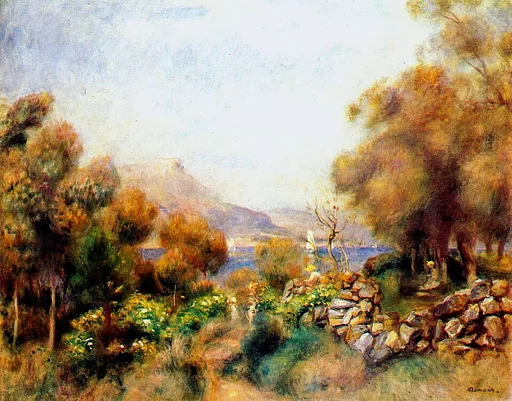
Antibes in Autumn
From $109 -
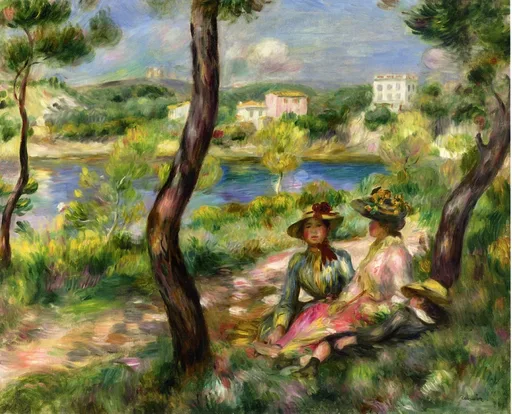
Beaulieu
From $109 -
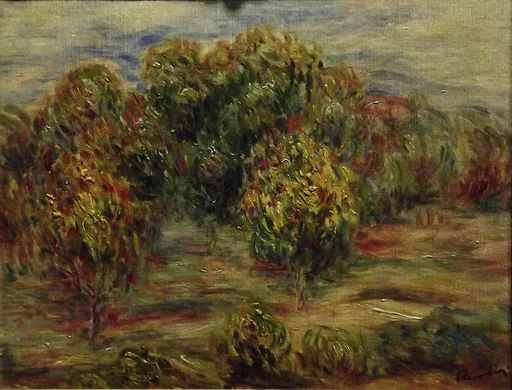
Cagnes Landscape
From $109 -
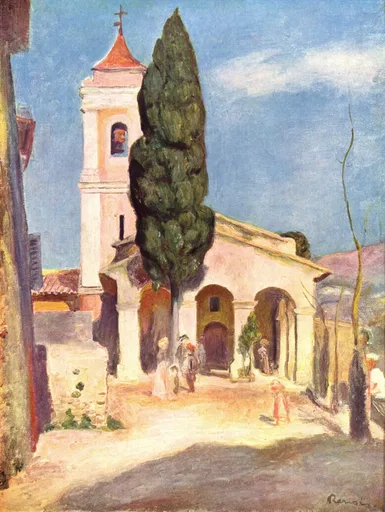
Church at Cagnes
From $109 -
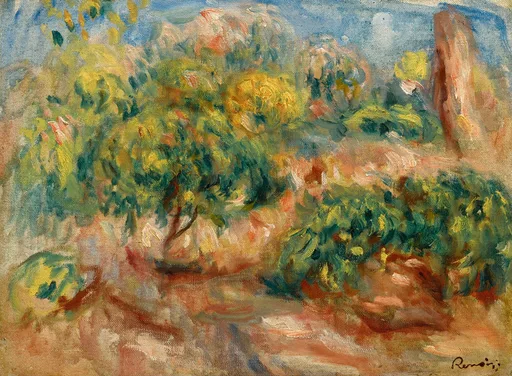
Esquisse de paysage à Cagnes
From $109 -
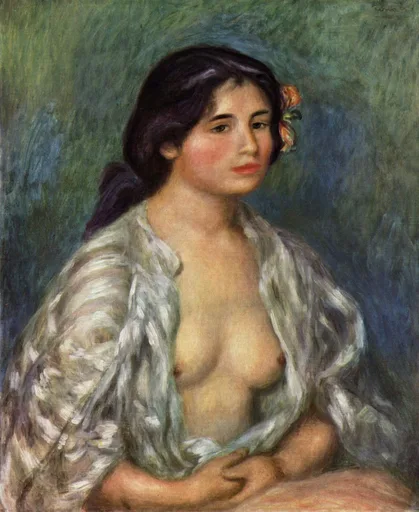
Gabrielle with Open Blouse
From $109 -
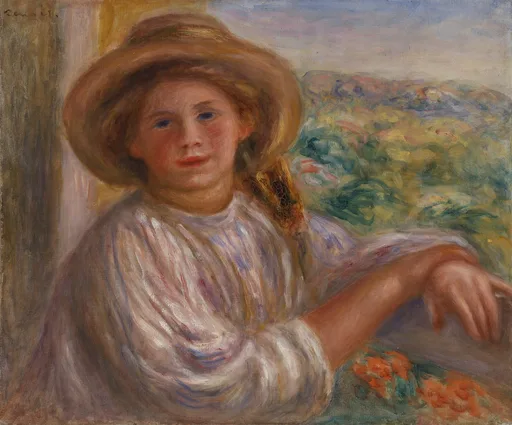
Girl on a Balcony, Cagnes (Jeune femme au balcon, Cagnes)
From $109 -
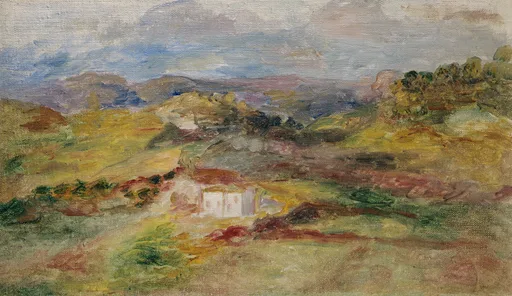
Houses at Cagnes
From $109 -
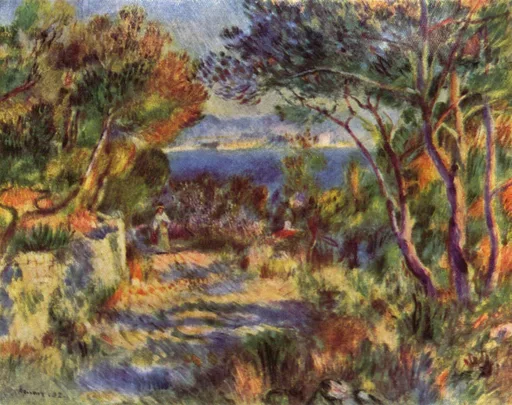
L’Estaque
From $109 -
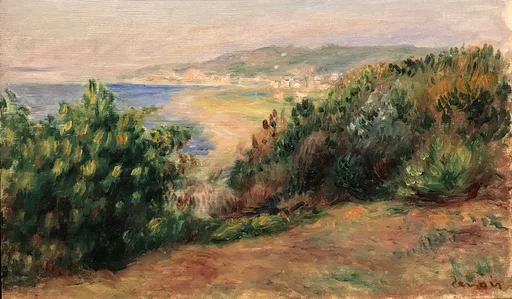
Landscape at Cagnes
From $109 -
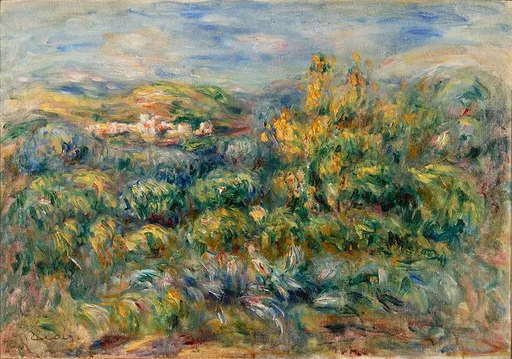
Landscape at Cagnes
From $109 -
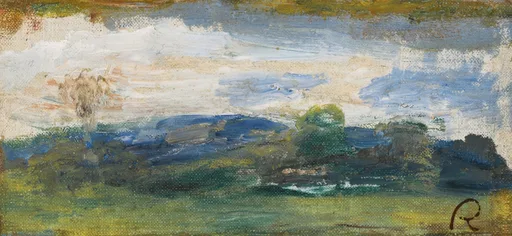
Landscape at Cagnes, Sketch
From $109 -
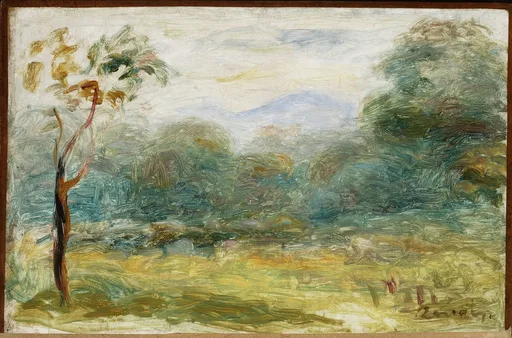
Landscape in Southern France (Cagnes).
From $109 -
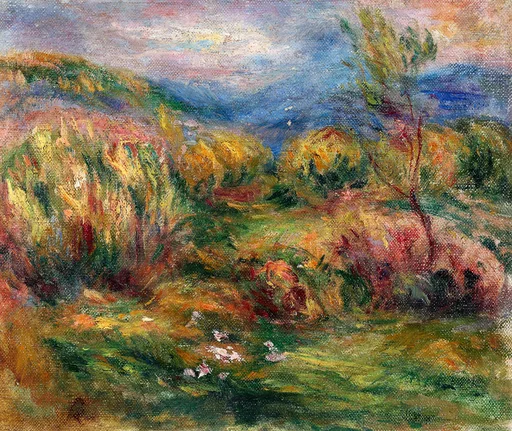
Landscape near Cagnes-sur-Mer
From $109 -
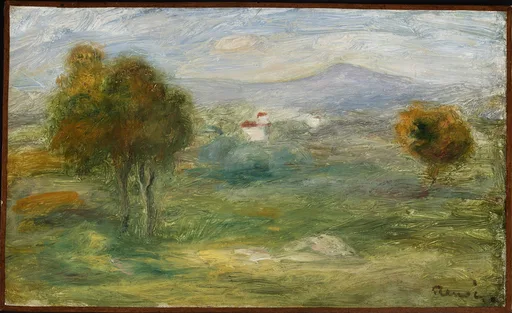
Landscape near Cros-de-Cagnes.
From $109 -
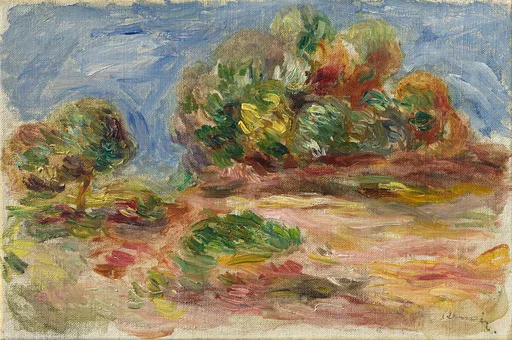
Landscape of Cagnes
From $109
Les Collettes
The property came with an ancient olive grove that Renoir bought partly to save it from being cut down. He built a house, and painted the trees from every angle for a decade. The olives are the recurring subject, their leaves turning silver and pink as the light moves, and the ground beneath them a warm haze rather than a described surface.
He also kept working from the figure here, with Gabrielle and local models posed outdoors among the trees, which is why the late nudes and these landscapes share a palette so exactly.
Painting with damaged hands
By 1910 Renoir could not open his fingers. Assistants placed the brush in his hand, and he moved his arm from the shoulder. The received story is that this explains the loose late style, but the change had begun a decade earlier, and the late canvases are as deliberate as anything he made. What the illness did was remove any possibility of fussing.
Which room this collection suits
These are the warmest pictures in the catalogue, and the least literal. They suit a room you want to feel warm rather than a room you want to fill with a subject: a bedroom, a sitting room, a hallway that gets no sun. On a cool grey or white wall they are remarkable. Given how abstract the late handling is, they hold up at large sizes better than most, so a wide canvas above a sofa works well.
Frequently asked questions
Where is Cagnes?
Cagnes-sur-Mer, on the coast between Nice and Antibes. Renoir bought the Les Collettes estate there in 1907; the house is now a museum, and the olive grove he painted is still standing.
Why did he move south?
For his health. The arthritis that eventually crippled him was worse in the northern winters, and his doctors recommended a warm climate. He had wintered in the Midi for years before buying the property.
Do these look like his famous pictures?
Less than you might expect, and that is the appeal. The subjects are dissolved and the colour is much warmer than in the boating and garden pictures. Somebody who finds the well known Renoirs too sweet often prefers these.
What size suits a late landscape?
Generous. Because the handling is broad and there is little fine detail, these survive enlargement better than the crowd scenes. One hundred and twenty centimetres and up on a main wall is entirely reasonable.