
Hats & Parasols Collection: Pierre-Auguste Renoir Oil Painting Reproductions
A hat brim casts a shadow, and a parasol turns daylight into coloured light: for a painter chasing the effect of sun on skin, both are instruments rather than accessories. These 68 works gather the pictures where headwear and shade do the real work. Straw boaters on the river at Chatou, feathered town hats in a theatre box, white bonnets on children, and the parasols that scatter a summer garden with green and pink reflections. The clothes themselves are a record of their moment, since Parisian fashion of the 1870s and 1880s changed fast and Renoir painted it closely enough that costume historians still use these canvases. But the reason to hang one is optical. The shaded half of a face under a hat brim is where Renoir’s colour is at its most inventive, full of greens and violets that have no business being in skin and are entirely convincing.
Showing 1–16 of 84 results
-
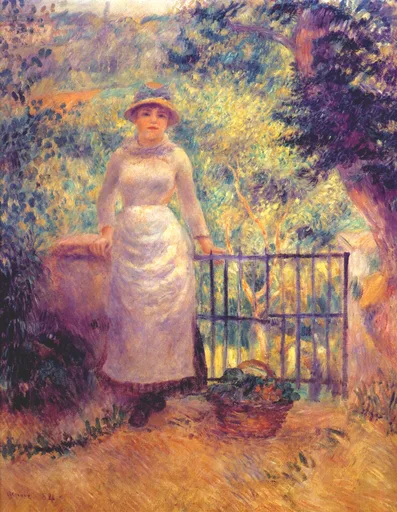
Aline at the Gate
From $109 -
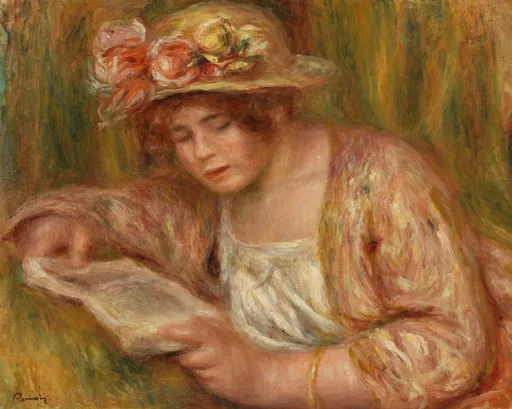
Andrée in a Hat, Reading (Andrée en chapeau, lisant)
From $109 -
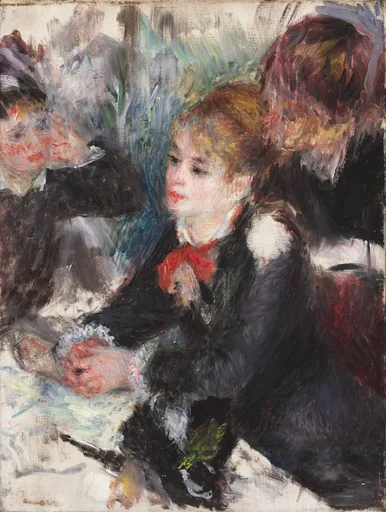
At the Milliner’s
From $109 -
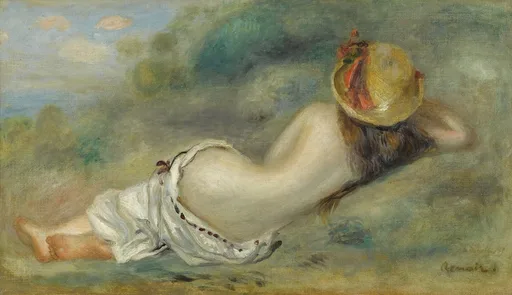
Bather Lying on Her Back with a Straw Hat or Woman Lying on the Grass
From $109 -
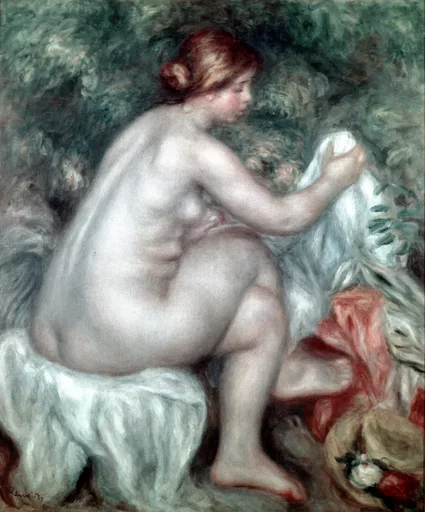
Bather with Hat
From $109 -
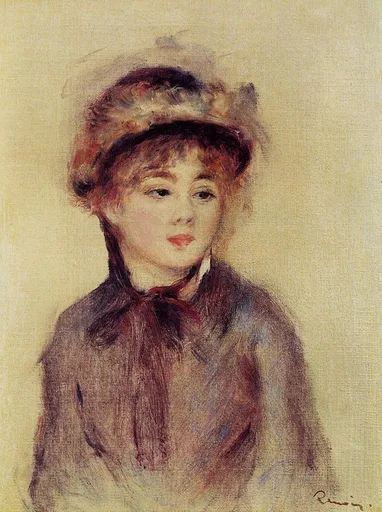
Buste of Woman Wearing a Hat
From $109 -
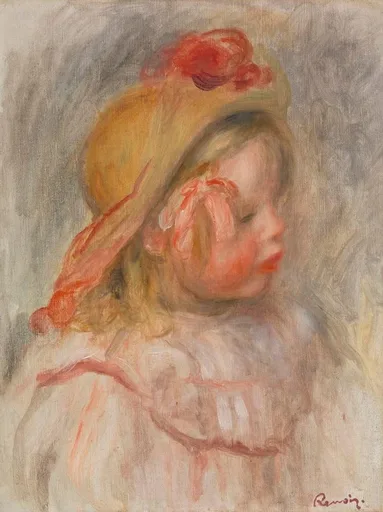
Coco in a Straw Hat
From $109 -
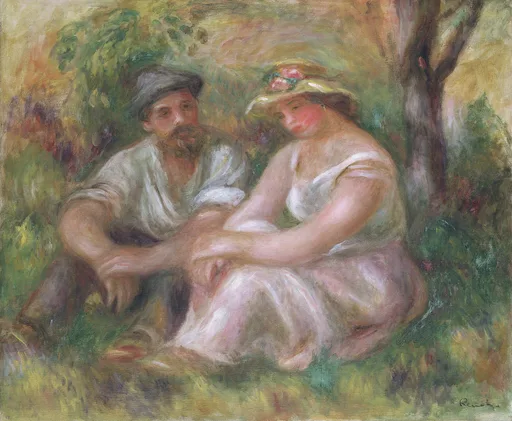
Conversation
From $109 -
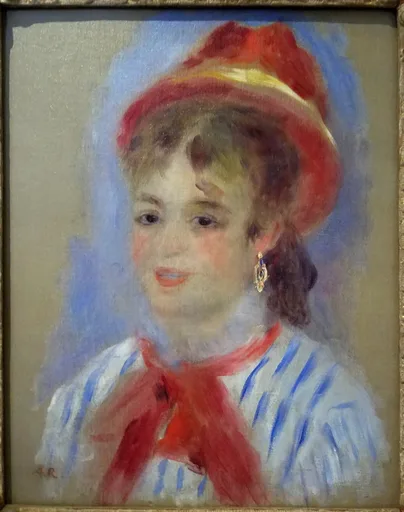
Estelle in a Red Hat
From $109 -
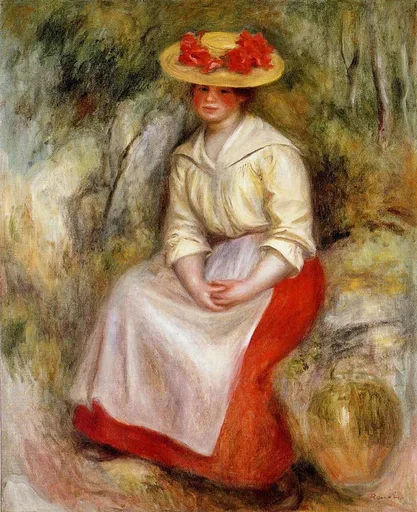
Gabrielle in a straw hat
From $109 -
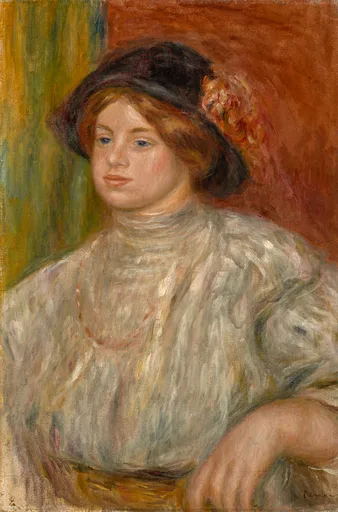
Gabrielle with a Hat
From $109 -
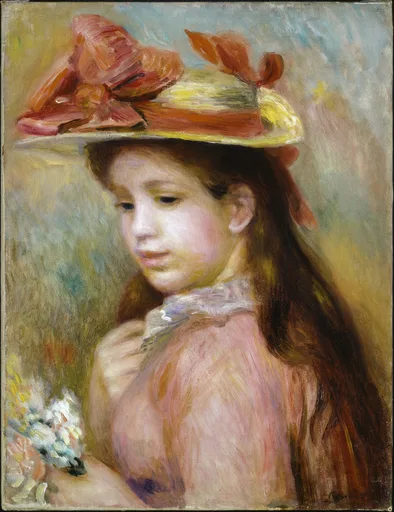
Girl in a Hat
From $109 -
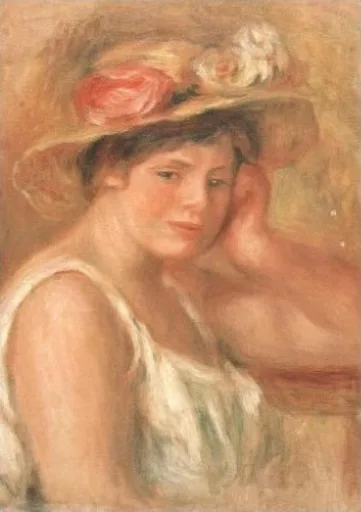
Girl in a Hat
From $109 -
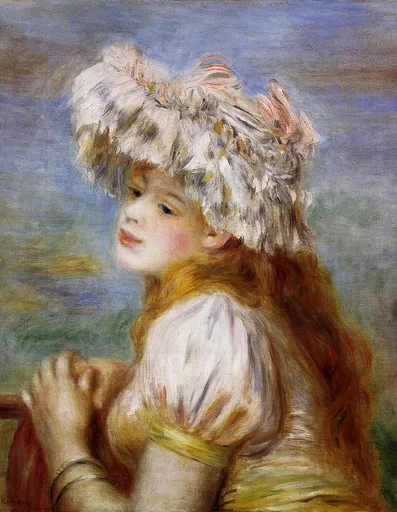
Girl in a Lace Hat
From $109 -
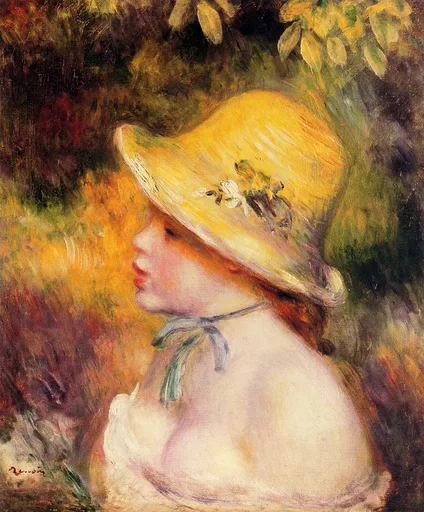
Girl in a Straw Hat
From $109 -
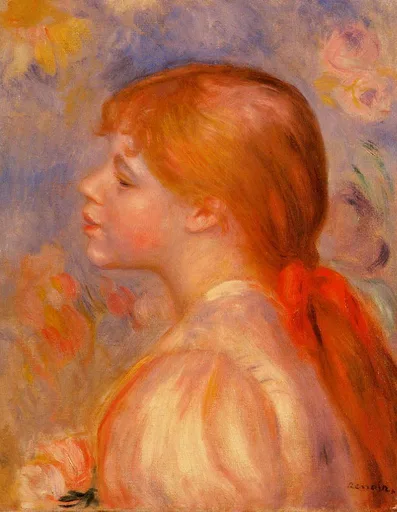
Girl with a Red Ribbon, Flowered Background
From $109
Shade as a colour problem
Painting a face in full sun is easy; painting one half in shadow under a straw brim is not, and it was exactly the problem the Impressionists set themselves. Renoir's answer was to refuse grey. The shadow under a hat is painted in green, blue and violet at full saturation, and it reads as cool shade only because the lit side is warm.
A parasol does something else again: it filters daylight, so the skin below it takes the colour of the fabric. In the garden pictures you can often work out what colour a parasol is by looking at the face rather than the canopy.
A record of a decade
The hats date the pictures precisely. The wide flat boater belongs to the river and to summer; the small elaborate town hat with feathers and ribbon belongs to the theatre and the boulevard. Renoir's models were often milliners and shop assistants, and the hats were sometimes borrowed for the sitting, which is why the same one reappears on different heads.
Which room this collection suits
These are mostly half-length figures with a strong single accent of colour, which makes them easy to place against a plain wall. They suit a dressing room, a bedroom, a hallway or a wall beside a mirror. Fifty to seventy centimetres is the natural range. Because the pictures are built around a bright hat, avoid a busy wallpaper that will compete for the same attention.
Frequently asked questions
Why so many hats?
Partly fashion, since Parisian women did not go out uncovered, and partly optics. A brim divides a face into a lit and a shaded half, which is the effect Renoir spent his career painting.
Are the clothes historically accurate?
They are contemporary observation rather than costume study, which makes them more reliable, not less. The dresses and hats are what his models actually wore between about 1874 and 1885.
Which is the best known picture here?
The boating and garden scenes with straw hats are the most recognised, along with the theatre pictures where the hat and the opera glasses do the storytelling. Several are also catalogued under Girls and Sisters.
What frame suits a picture with a bright hat?
A quiet one. The hat is already the loudest note in the canvas, so a plain warm wood or a narrow dark moulding keeps the attention where the painter put it.