
Bathers & Nudes Collection: Pierre-Auguste Renoir Oil Painting Reproductions
The bather was Renoir’s lifelong ambition and his most argued-about subject. These 131 works span forty years, from the sharply drawn figures of the mid 1880s, when he briefly turned away from Impressionism toward Ingres and the classical line, to the ample, coral-toned nudes painted at Cagnes in his last decade with brushes strapped into arthritic hands. He was explicit about wanting to join a tradition that ran through Titian, Rubens and Boucher, and he was not interested in the anatomical realism his contemporaries pursued. The bodies are frankly idealised, lit from every side at once, and set among leaves and water that share their colour. Whether that appeals is a matter of taste, but the paint is extraordinary: skin built from strokes of rose, cream, green and violet that read as flesh only at a distance. These are private pictures, and most people hang them accordingly.
Showing 1–16 of 140 results
-
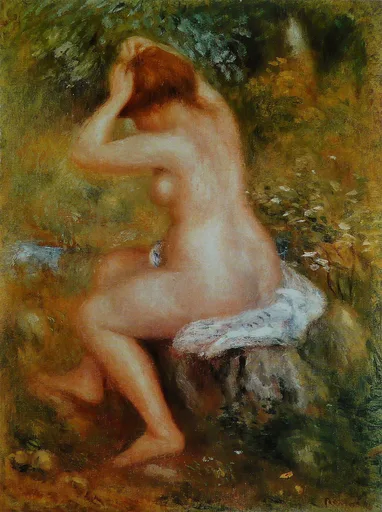
A Bather
From $109 -
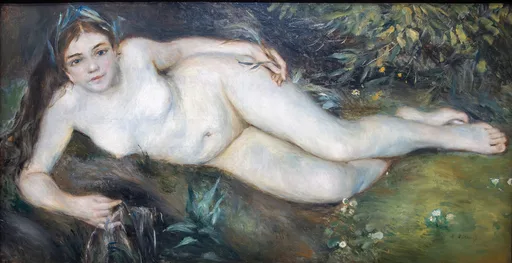
A Nymph by a Stream
From $109 -
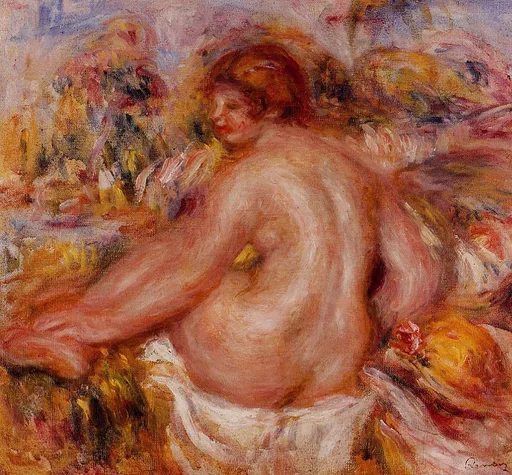
after bathing seated female nude
From $109 -
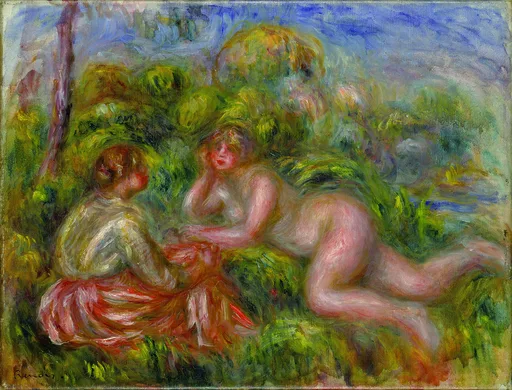
After the Bath
From $109 -
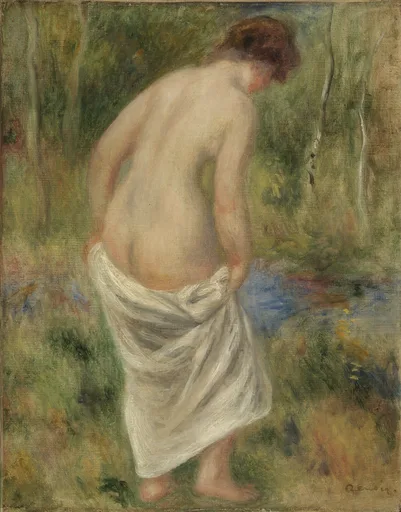
After the Bath (Après le bain)
From $109 -
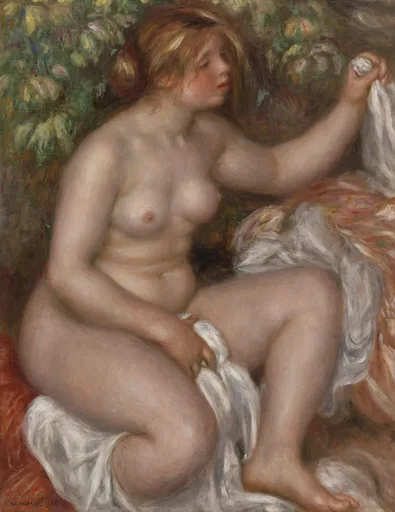
After the Bath (La Sortie du bain)
From $109 -
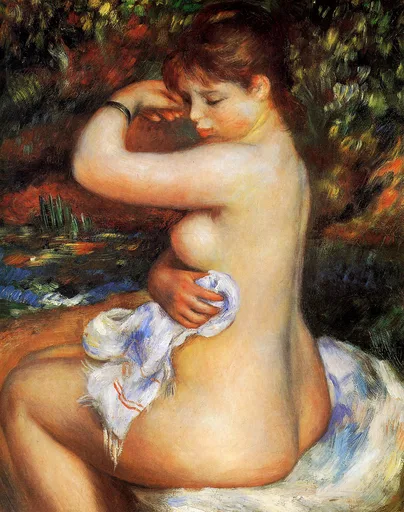
After the Bath, Black Bracelet
From $109 -
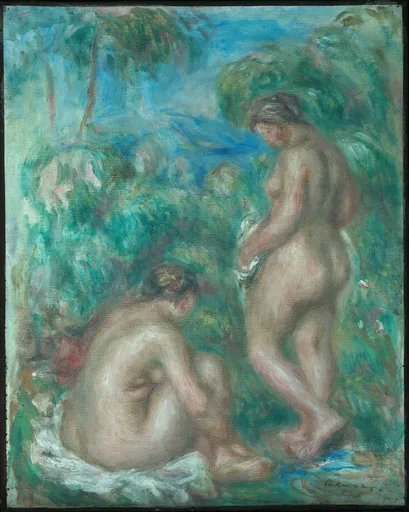
Badende kvinner
From $109 -
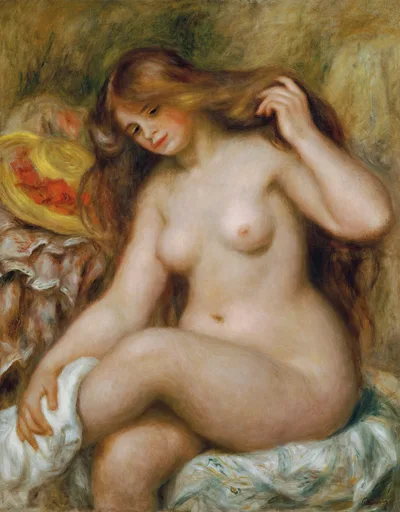
Badende mit blondem, offenem Haar
From $109 -
Bather
From $109 -
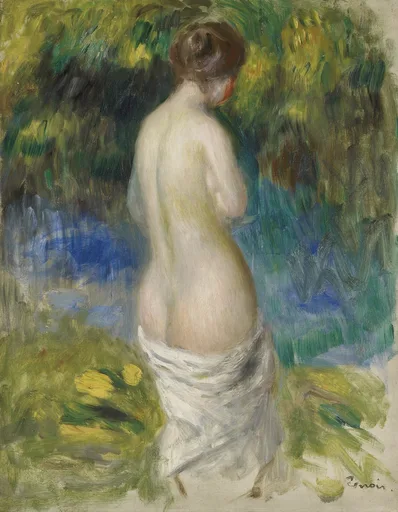
Bather
From $109 -
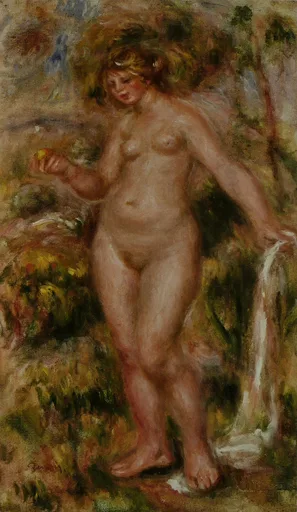
Bather
From $109 -
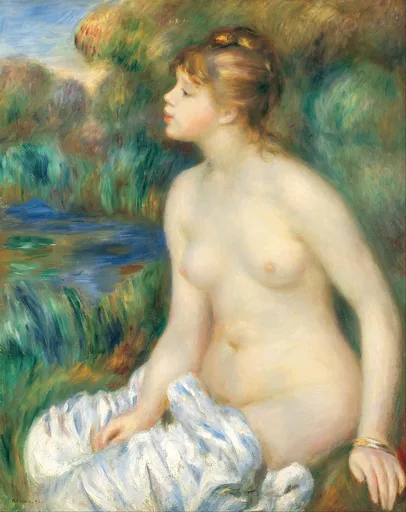
Bather
From $109 -
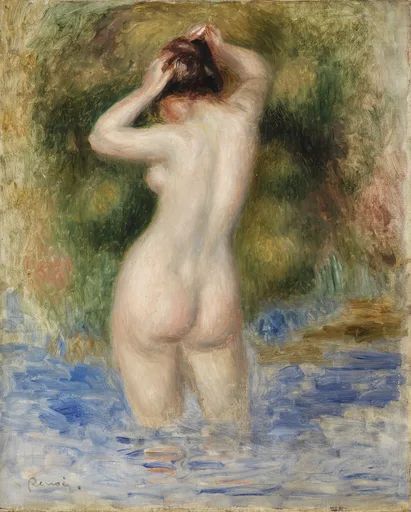
Bather (Baigneuse)
From $109 -
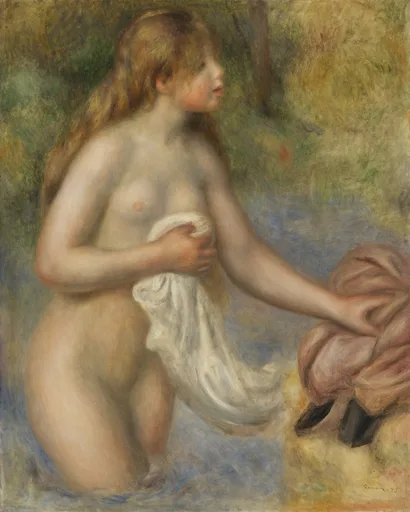
Bather (Baigneuse)
From $109 -
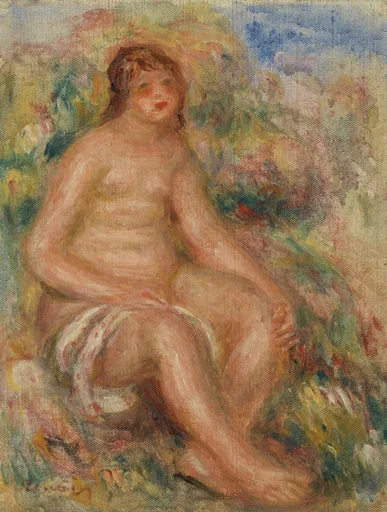
Bather (Baigneuse)
From $109
Two very different periods
The 1880s bathers are the product of a deliberate crisis. Renoir decided he had gone as far as instinct could take him, studied Raphael in Italy and Ingres at home, and produced The Great Bathers with hard contours and cool porcelain skin. Critics who loved his earlier softness were dismayed.
He relented. From the 1890s the line loosens again, and in the Cagnes years the nudes become warm, heavy and dissolved into their surroundings, painted in reds and oranges that no one else was using. These late works are the ones that influenced Picasso and Matisse, and they are the reason this part of the catalogue is taken seriously today.
A note on choosing one
This is the one collection where the subject decides the room before the picture does. They suit a bedroom, a dressing room or a private study. Most buyers do not want one facing the front door, and it is worth deciding that before you fall for a particular canvas. If you want the warmth without the nudity, the Women and Figures collection carries the same palette in clothed subjects.
Which room this collection suits
Warm, enclosed rooms with cool walls. In a north-facing bedroom these paintings glow; in a south-facing room already painted terracotta they can tip into heaviness. They reward close viewing, so hang them where you stand near them rather than across a large space, and keep the size moderate: sixty to ninety centimetres is usually right.
Frequently asked questions
Why do the late nudes look so different from the early ones?
Because they are separated by thirty years and a deliberate change of direction. The mid 1880s works have hard outlines and cool skin, the result of Renoir studying Ingres and Raphael. The late Cagnes nudes abandon the line entirely and are built from warm broken colour.
Who were the models?
Household members and local women, most often Gabrielle Renard and, in the last years, Andree Heuschling, who later married his son Jean. Renoir rarely worked from professional studio models in the late period.
Is the nudity explicit?
They are traditional academic nudes: unclothed figures in a landscape or interior, without narrative or provocation. Whether that suits a given room is a personal decision, which is why we keep them in a collection of their own.
What finish suits these best?
A warm dark wood frame, which contains the composition and keeps the flesh tones forward. A bright gold moulding competes with the palette. Stretched without a frame works for the late, looser canvases in a contemporary room.