
Children Collection: Pierre-Auguste Renoir Oil Painting Reproductions
Renoir had three sons, and he painted them constantly. These 69 works are the warmest corner of the catalogue: Pierre reading, Jean with his hair still long in the fashion of the time, and above all Claude, called Coco, born in 1901 and painted more often than any other child in nineteenth century French art. Alongside them are the children of patrons and neighbours, girls with watering cans, boys with hoops, and the small heads he made in an afternoon for no client at all. What keeps these pictures out of sentimentality is the handling. Renoir does not sweeten a child’s face; he paints the light on it with exactly the same broken strokes he uses on a river or a bouquet, and the result is solid rather than saccharine. They are the easiest pictures in the catalogue to live with, and the obvious choice for a nursery, a family landing or a room where the mood should be gentle.
Showing 1–16 of 87 results
-
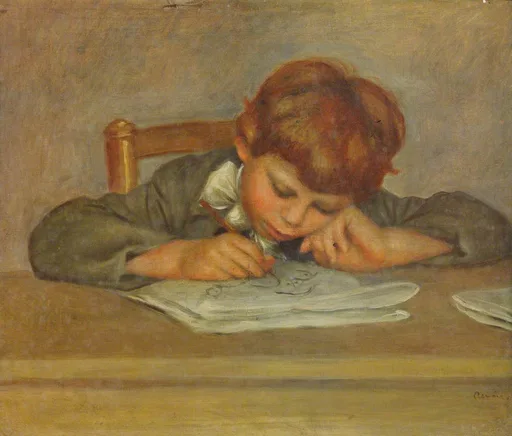
A Little Boy Writing
From $109 -
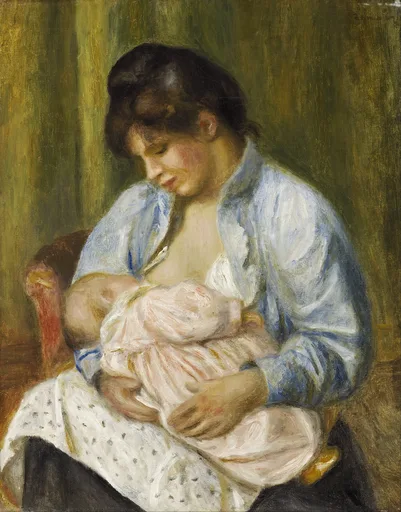
A Woman Nursing a Child
From $109 -
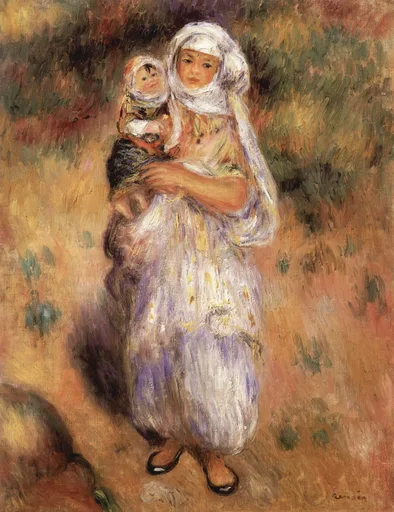
Algerian Woman with Child
From $109 -
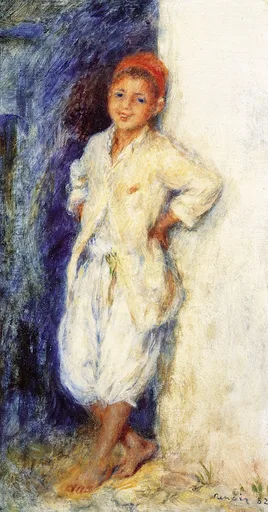
Ali, Arab Boy
From $109 -
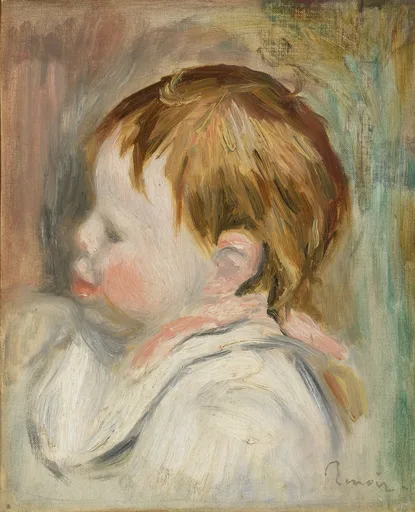
Baby’s Head (Tête d’enfant, profil à gauche)
From $109 -
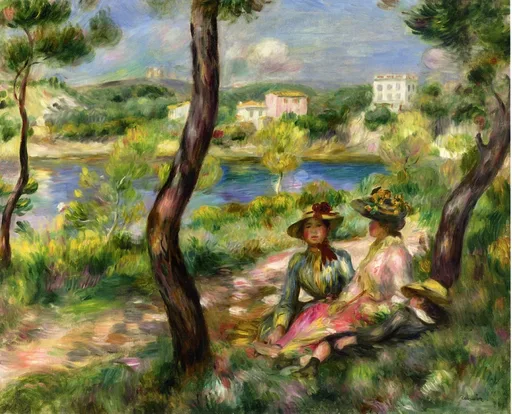
Beaulieu
From $109 -
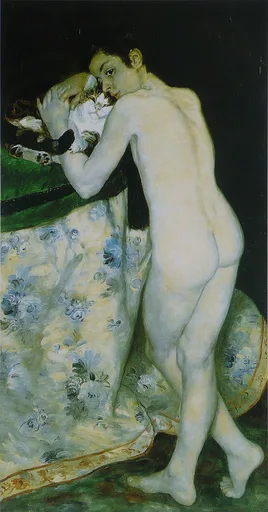
Boy with a Cat
From $109 -
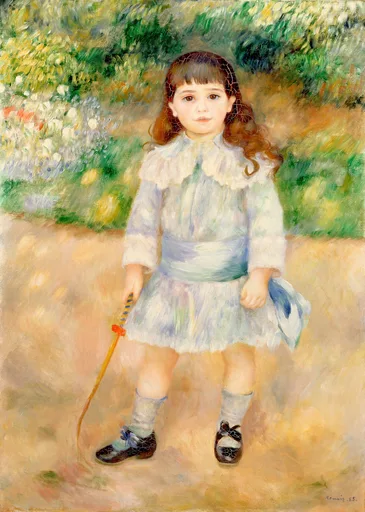
Boy with a Whip
From $109 -
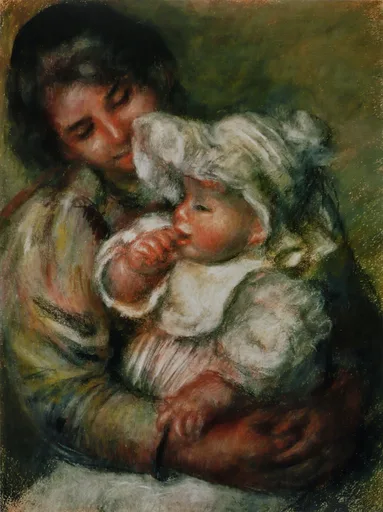
Child and Her Nurse
From $109 -
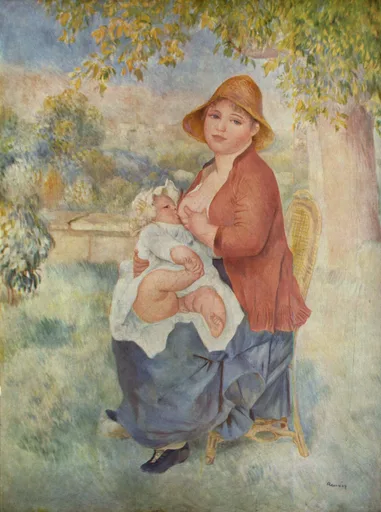
Child at Breast (Maternity)
From $109 -
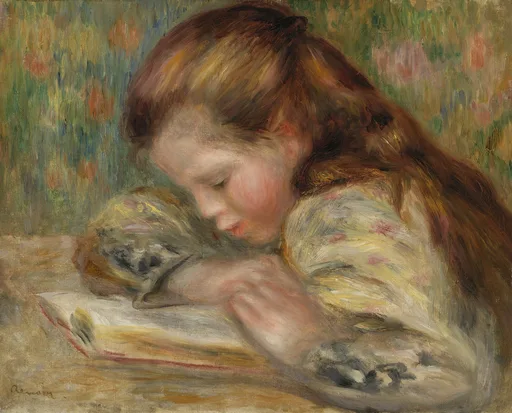
Child Reading (Enfant lisant)
From $109 -
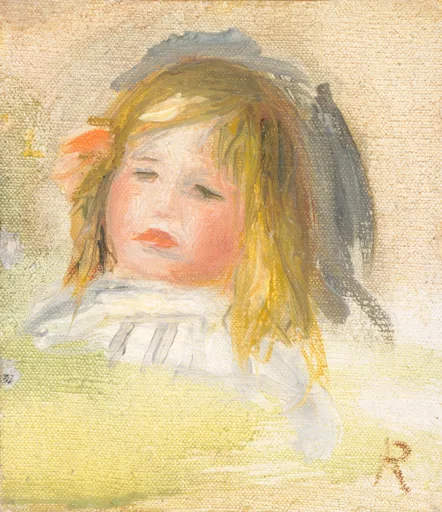
Child with Blond Hair
From $109 -
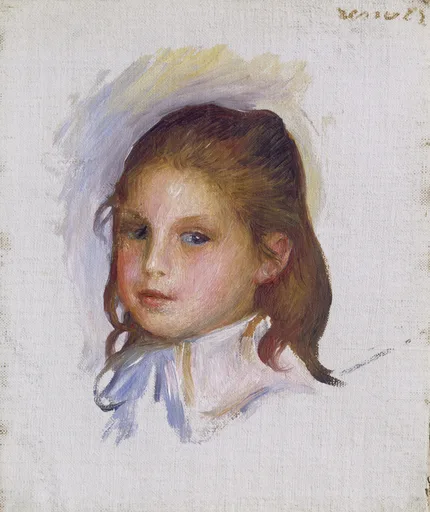
Child with Brown Hair
From $109 -
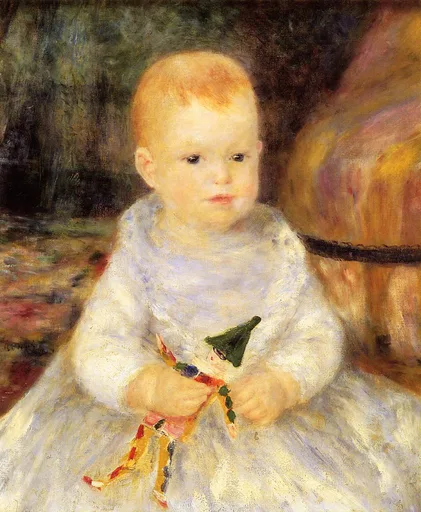
Child with Doll
From $109 -
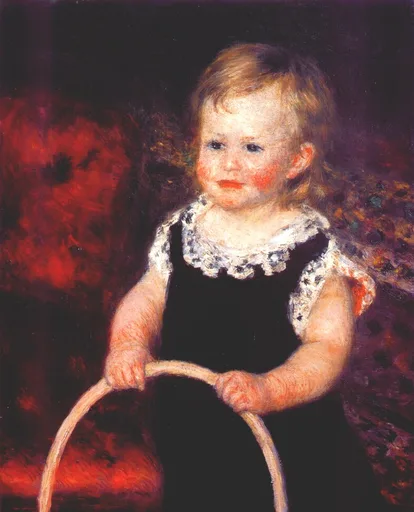
Child with Hoop
From $109 -
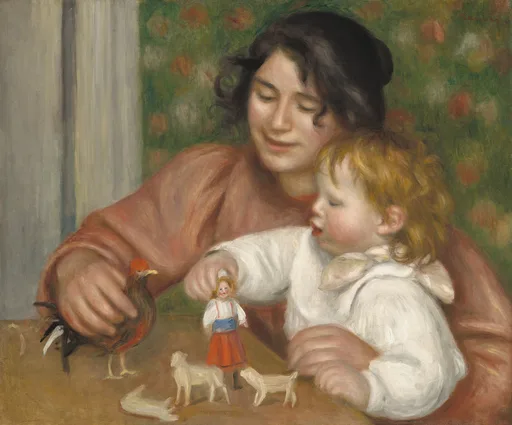
Child with Toys – Gabrielle and the Artist’s Son, Jean
From $109
Pierre, Jean and Coco
Pierre was born in 1885, Jean in 1894, and Claude, always called Coco, in 1901 when Renoir was sixty. Jean became the film director; Coco became the most painted child of his father's late years, in a straw hat, in a white smock, drawing at a table, or simply asleep.
Because these were family pictures rather than commissions, they were painted without hurry and often left unfinished at the edges. The face is resolved and the background is a few strokes of warm colour, which is exactly the balance most people want on a wall.
Not a sentimental painter
It is worth saying plainly, because reproductions of these pictures are often used in a way that suggests otherwise. Renoir paints children as small solid people in strong light, not as decorative motifs. The cheeks are pink because light is falling on them, not because the picture is being sweet. That is why the good ones survive being lived with for years.
Which room this collection suits
Nurseries and children's rooms, obviously, but also family landings, kitchens and the wall beside a stair. Hang them low enough that a child can actually see them, which usually means lower than adult eye level. Forty to sixty centimetres is plenty; these are intimate pictures and enlarging them works against their character.
Frequently asked questions
Who is Coco?
Claude Renoir, born in 1901, the painter's third and youngest son. He appears in a great many of the late canvases, usually in a wide straw hat or a white smock, and is often named in the title.
Are these suitable for a child's room?
They are among the best choices for one. The subjects are children, the palette is warm, and the scale is naturally modest. Hang them at a child's eye level rather than an adult's.
Is Jean Renoir the film director in these pictures?
Yes. Jean, born in 1894, is the boy with long hair in several of the family portraits, and he went on to direct La Grande Illusion and La Regle du jeu.
What size and finish work best?
Forty to sixty centimetres, stretched or in a simple warm wood frame. In a child's room a stretched canvas with no glass and no hard frame edge is the practical choice as well as the good looking one.