
Girls & Sisters Collection: Pierre-Auguste Renoir Oil Painting Reproductions
Two heads close together, one leaning slightly toward the other: it is one of the most recognisable arrangements in Renoir, and these 120 works are built on it. Sisters on a terrace above the Seine, girls sharing a book or a piano stool, friends in hats under summer trees. The doubling is not sentimental accident but a compositional device. Two figures give him a reason to repeat a colour, echo a curve and set warm skin against warm skin, and they let the picture be about companionship rather than about a single personality. The best known is Two Sisters, painted at Chatou in 1881, with its red hat and basket of wool against the river; but the pattern runs through his whole career, from the Paris interiors of the 1870s to the daughters of his southern neighbours forty years later. These are among the warmest and most immediately likeable pictures he made.
Showing 1–16 of 129 results
-
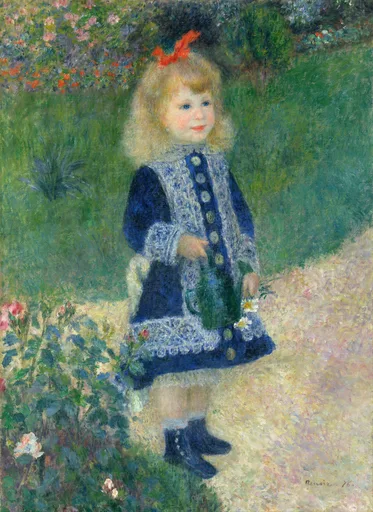
A Girl with a Watering Can
From $109 -
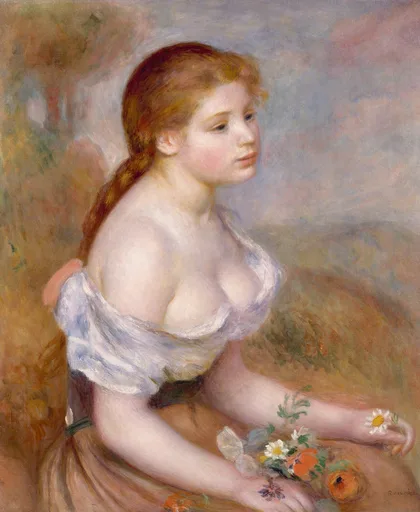
A Young Girl with Daisies
From $109 -
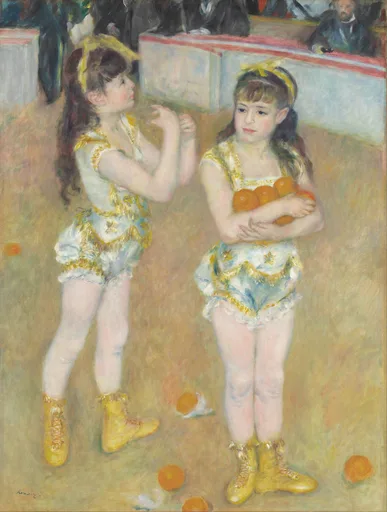
Acrobats at the Cirque Fernando (Francisca and Angelina Wartenberg)
From $109 -
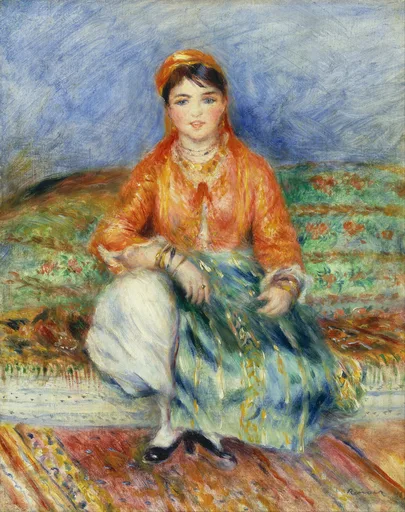
Algerian Girl
From $109 -
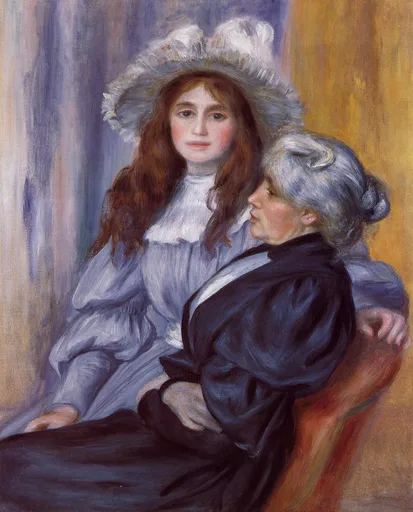
Berthe Morisot et sa fille Julie Manet
From $109 -
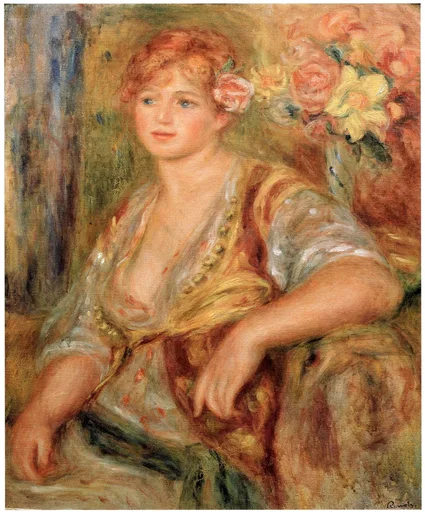
Blonde Girl with a Rose
From $109 -
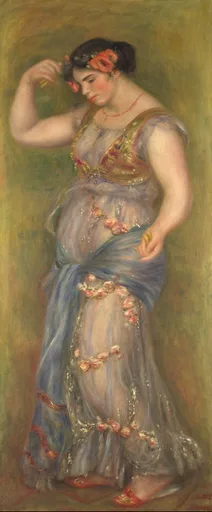
Dancing Girl with Castanets
From $109 -
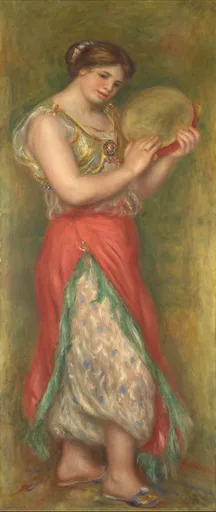
Dancing Girl with Tambourine
From $109 -
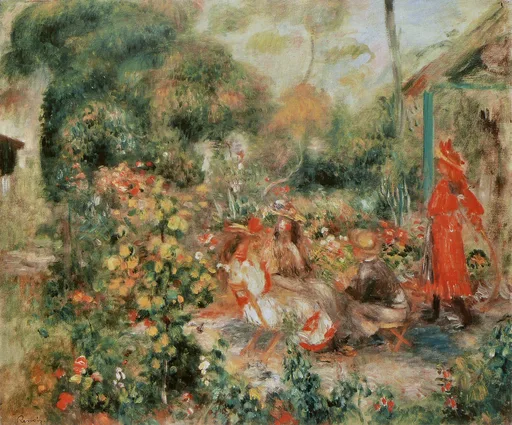
Four Young Girls in a Garden
From $109 -
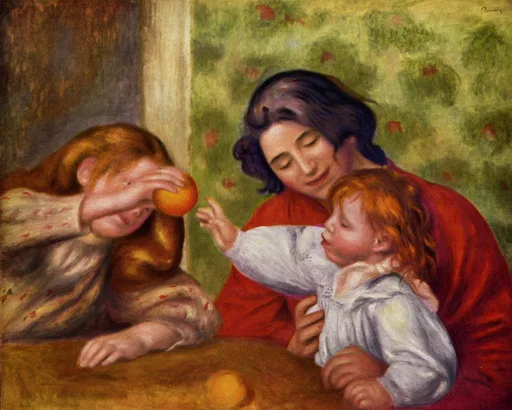
Gabrielle, Jean, and Young Girl
From $109 -
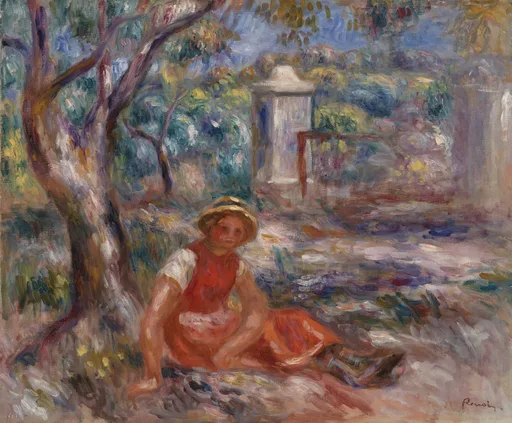
Girl at the Foot of a Tree (Fillette au pied d’un arbre)
From $109 -
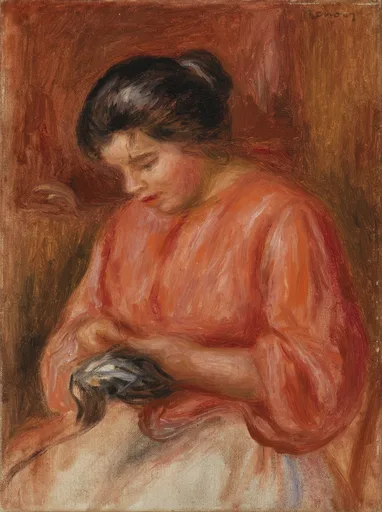
Girl Darning
From $109 -
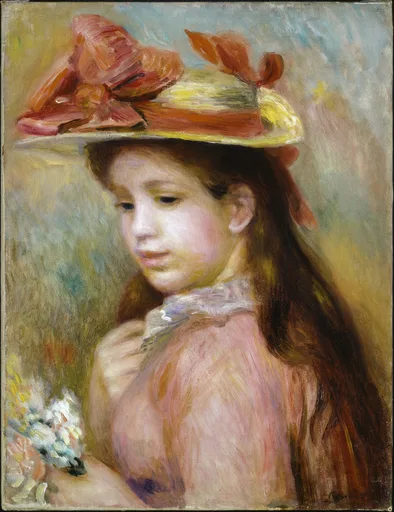
Girl in a Hat
From $109 -
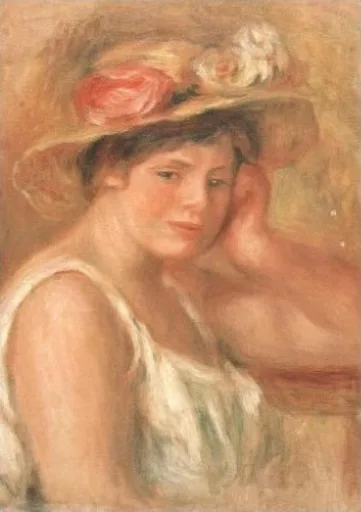
Girl in a Hat
From $109 -
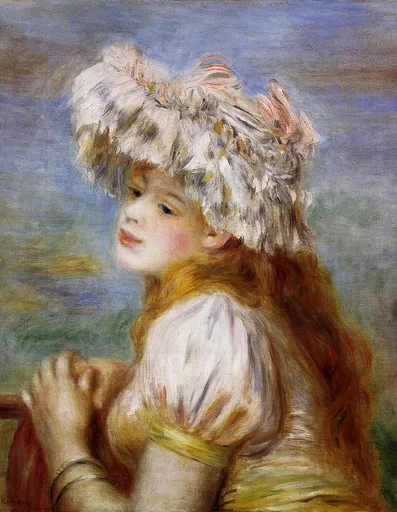
Girl in a Lace Hat
From $109 -
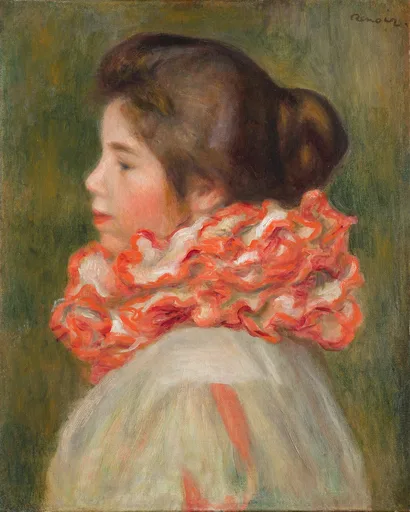
Girl in a Red Ruff
From $109
Why he painted them in pairs
A single figure has to hold the canvas alone, and Renoir was never much interested in psychological drama. Two figures give him rhythm. He can put a red hat against a green rail, then answer it with a second, smaller note of red in a mouth or a ribbon, and the eye travels between them.
The device suited his patrons too. Families commissioned pictures of their daughters together, and the results are more relaxed than a formal single portrait: the sitters have each other to attend to, and they stop performing for the painter.
The pictures people recognise
Two Sisters, also called On the Terrace, is the one most people know, painted at Chatou in the same summer as the boating party pictures. The Daughters of Catulle Mendes and the several versions of girls at the piano belong to the 1890s, when Renoir was courting a more respectable, decorative manner and, for once, receiving state commissions.
Which room this collection suits
These are sociable pictures, and they suit rooms where people gather: a dining room, a wide living room wall, a family landing. Because the composition is usually two half-length figures, the faces are already large in the frame and you do not need great size. Sixty to ninety centimetres is comfortable. Hang them at eye level, and give them a wall that is not already busy, because the pictures themselves carry a lot of pattern.
Frequently asked questions
Is Two Sisters in this collection?
Yes, along with the other paired and grouped young figures. If you are looking specifically for the picture with the red hat and the basket of wool, it is catalogued under its own title as well.
Are the sitters actually sisters?
Sometimes, and sometimes not. The title of Two Sisters was given by a dealer rather than by Renoir, and the two models are not known to have been related. He was arranging a picture, not documenting a family.
What size for a dining room?
Larger than you might think, because dining rooms are seen from a seated position across a table. Ninety to one hundred and twenty centimetres on the long side holds a dining wall without crowding it.
Do these work as a pair on a wall?
They do, and the collection is well suited to it: choose two canvases of the same format and hang them with roughly a hand's width between. Keep the palettes close, since Renoir's reds vary a good deal between the early and late works.