
Still Life Collection: Pierre-Auguste Renoir Oil Painting Reproductions
Peaches on a plate, a sugar bowl and a silver cup, strawberries scattered on a white cloth, pomegranates split open: these 61 still lifes are Renoir at his most private. Like the flower pieces they were painted with no client and no sitting to arrange, and they show the same freedom. What they add is structure. A bowl has a rim and a shadow, and fruit has weight, so these canvases give the eye something solid to hold in a way the looser flower studies do not. Renoir liked the problem of a white cloth, which is never white, and of a metal surface reflecting the room around it. The palette is warmer and deeper than in the flowers: reds and golds against olive and grey grounds. They are among the easiest paintings in the catalogue to place, because their scale is domestic by nature and their subject belongs, quite literally, to a table.
Showing 1–16 of 67 results
-
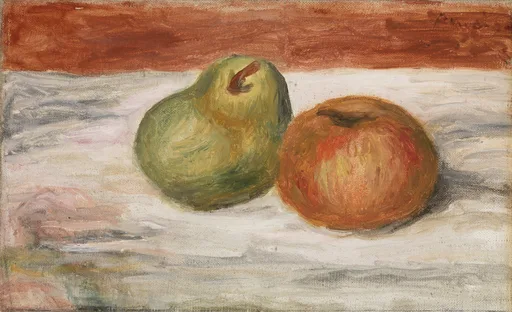
Apple and Pear (Pomme et poire)
From $109 -
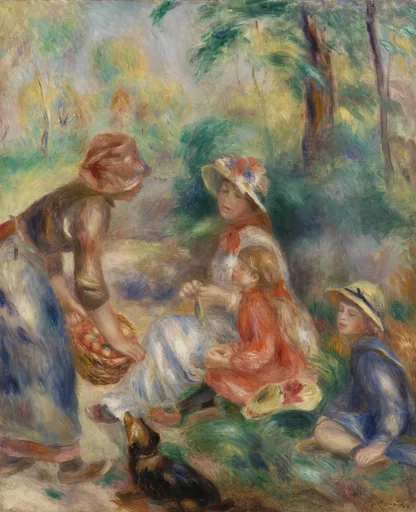
Apple Vendor (La Marchande de pommes)
From $109 -
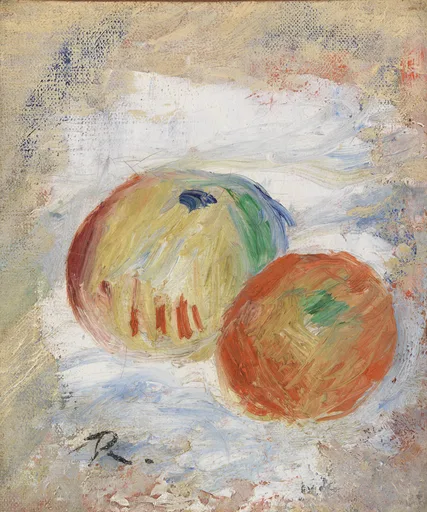
Apples (Pommes)
From $109 -
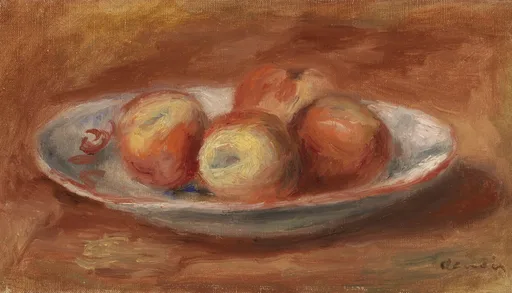
Apples (Pommes)
From $109 -
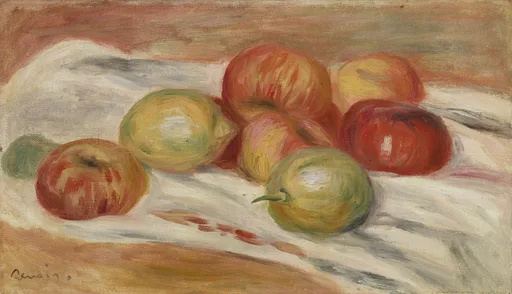
Apples and Lemons on a Cloth (Pommes et citrons sur une nappe)
From $109 -
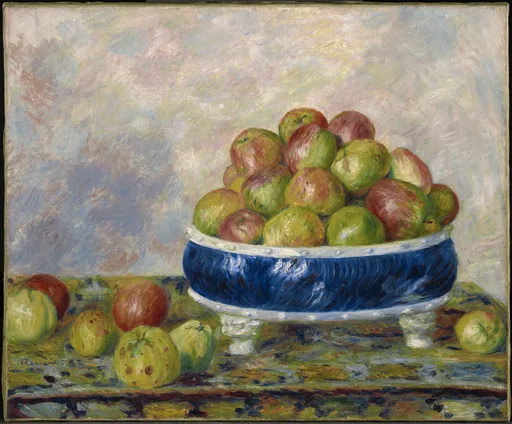
Apples in a Dish
From $109 -
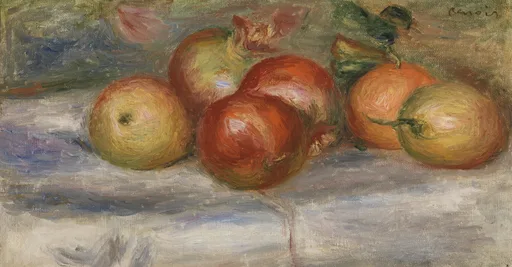
Apples, Orange, and Lemon (Pommes, oranges et citrons)
From $109 -
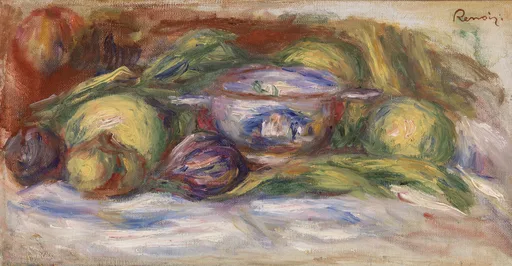
Bowl, Figs, and Apples (Écuelle, figues et pommes)
From $109 -
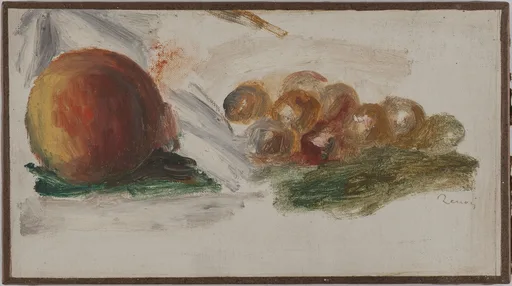
Fish and Grapes
From $109 -
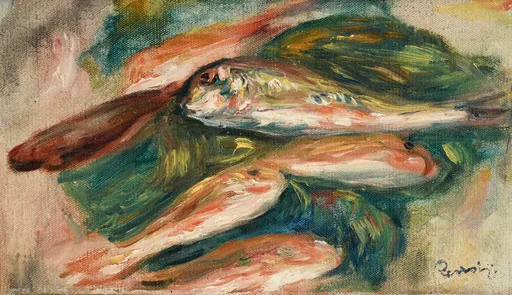
Fish on a Green Leaf
From $109 -
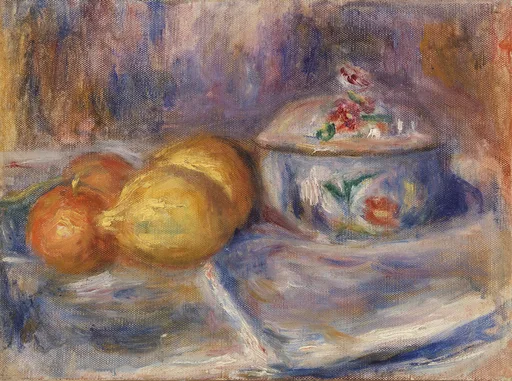
Fruit and Bonbonnière
From $109 -
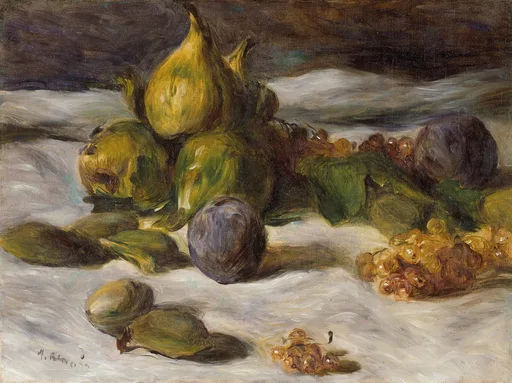
Fruit still life (figs and currants)
From $109 -
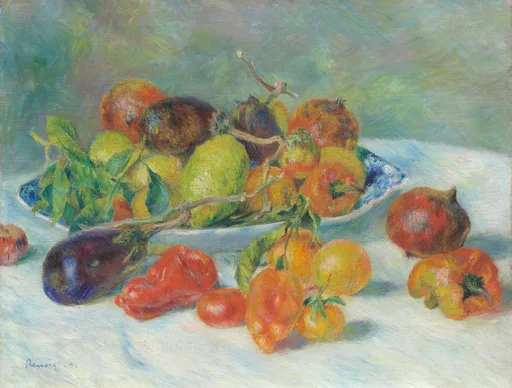
Fruits of the Midi
From $109 -
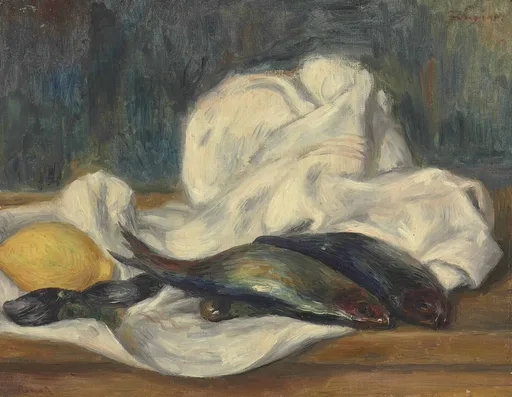
Herrings and Lemon
From $109 -
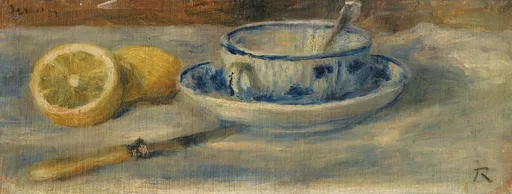
Lemon and blue cup – Fragment
From $109 -
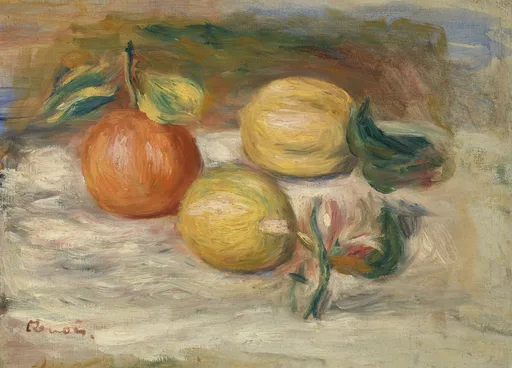
Lemons and Orange (Citrons et orange)
From $109
Painting without an audience
Still life sat at the bottom of the academic hierarchy, below history, portrait and landscape, and that suited Renoir. He used it, as he used flowers, to test how far a stroke could be pushed before the object stopped being recognisable. The answer, in the late work, is remarkably far.
The subjects are what was in the house: fruit from the market, a coffee service, onions, a hare or a partridge brought in by a neighbour. There is no vanitas symbolism and no display of virtuosity in the Dutch manner. A peach is painted because it is round and warm and takes the light well.
Where the drawing is
People who find Renoir's figures too soft often like the still lifes, and the reason is that an apple has an edge. The objects sit on a surface, cast shadows and occupy space, so there is more drawing holding the picture together than in almost anything else he painted. The late fruit pieces in particular have a solidity that points forward to Cezanne.
Which room this collection suits
The obvious room is the one with a table in it. A kitchen, a dining room, a breakfast corner or a pantry wall all take these well, and unlike the figure paintings they are entirely comfortable in a working space. Because the objects are life size or smaller in the original, a small reproduction is faithful rather than reduced: forty to sixty centimetres is right on most walls, and a pair hung together works particularly well.
Frequently asked questions
What did Renoir paint in his still lifes?
Fruit above all, especially peaches, strawberries, apples and pomegranates, then tableware such as sugar bowls, cups and coffee pots, and occasionally game. The subjects are domestic and unstaged.
How do these differ from the flower pieces?
Structure. A flower study is a mass of colour with soft edges; a still life has objects with weight, edges and cast shadows. If you want drawing as well as colour, choose here.
Do they suit a kitchen?
They are the natural choice for one, and canvas handles a kitchen better than paper behind glass. Keep it away from directly above a hob, where heat and grease are a problem for any artwork.
Can I hang two together?
Yes, and the collection lends itself to it. Choose two of the same size and format, hang them with about a hand's width between, and keep the ground colours close so the pair reads as one gesture.