
Gardens & Terraces Collection: Pierre-Auguste Renoir Oil Painting Reproductions
A garden gave Renoir the two things he wanted most in one place: figures at ease, and light broken into pieces by leaves. These 36 works are the pictures made in them. The garden in Montmartre where he painted the swing, the terraces above the Seine, his own garden at Fontenay and later the olive terraces at Cagnes, along with the paths, arbours and flowerbeds he found in other people’s. Dappled light is the technical signature here. Sunlight coming through foliage falls in coins of light and shade, and Renoir painted them literally, as patches of violet and gold scattered across a dress or a path. Critics of the time complained that his figures looked mouldy, which tells you how new it was. On a wall these are the most atmospheric pictures in the catalogue, less about a subject than about a temperature and a time of day.
Showing 1–16 of 53 results
-
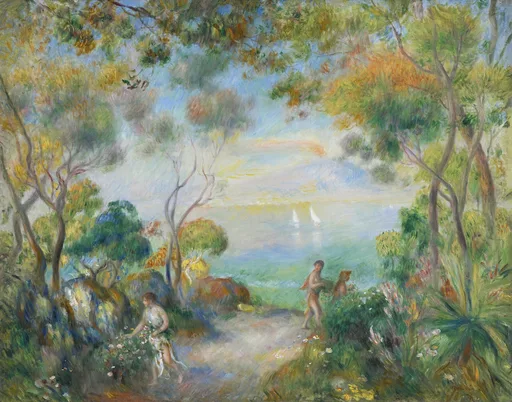
A Garden at Sorrente
From $109 -
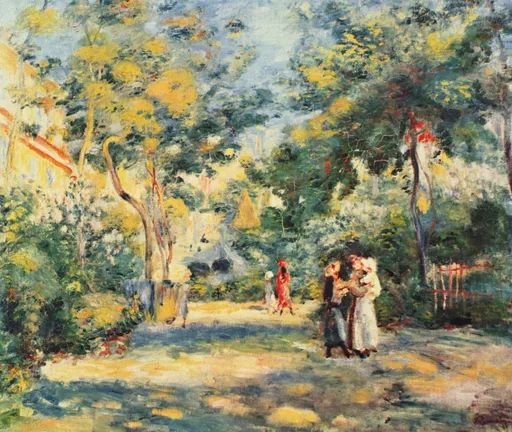
A Garden in Montmartre
From $109 -
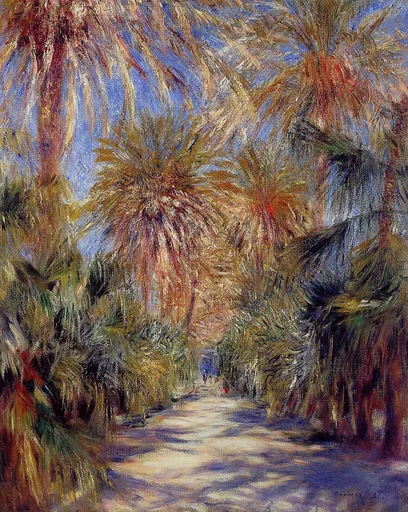
Algiers, the Garden of Trial
From $109 -
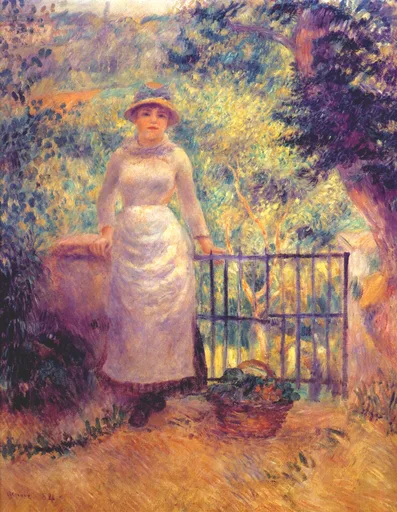
Aline at the Gate
From $109 -
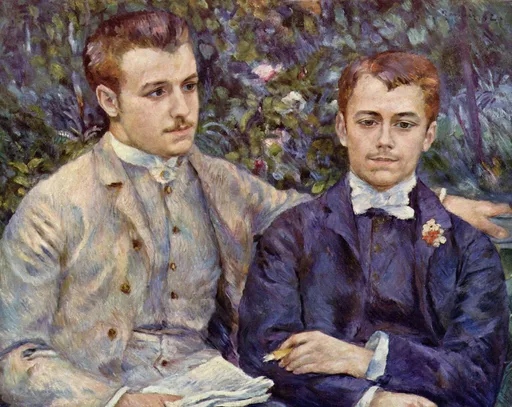
Charles and Georges Durand-Ruel
From $109 -
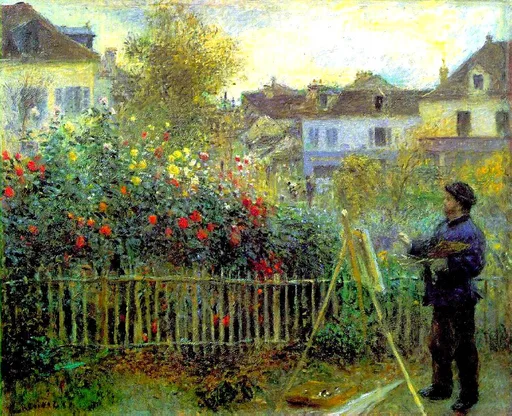
Claude Monet Painting in His Garden at Argenteuil
From $109 -
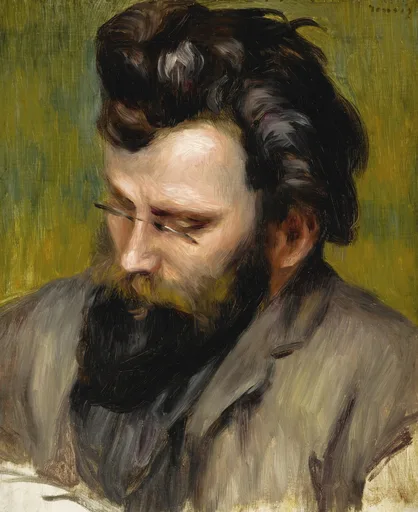
Claude Terrasse
From $109 -
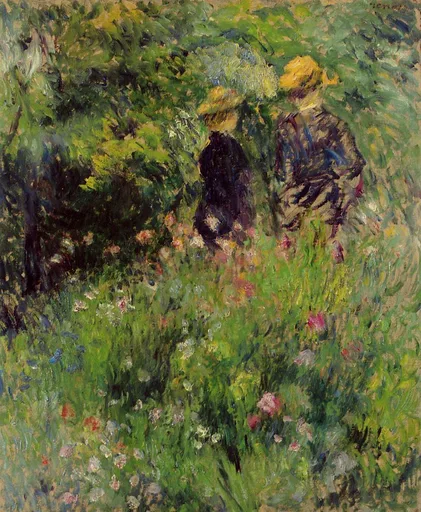
Conversation in a Rose Garden
From $109 -
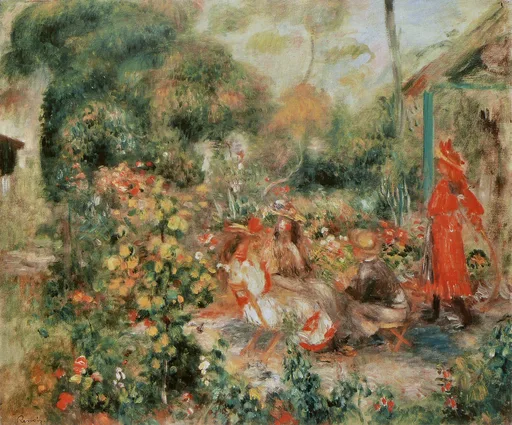
Four Young Girls in a Garden
From $109 -
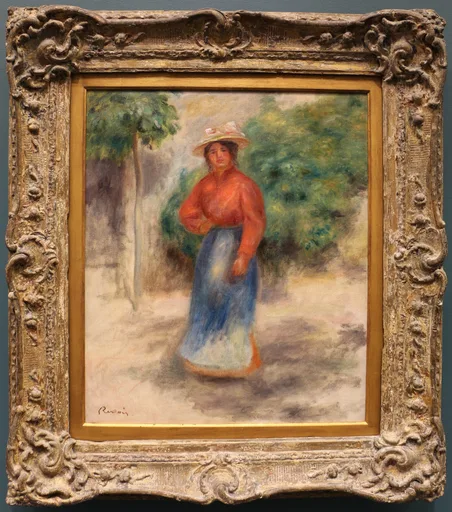
Gabrielle in the Garden
From $109 -
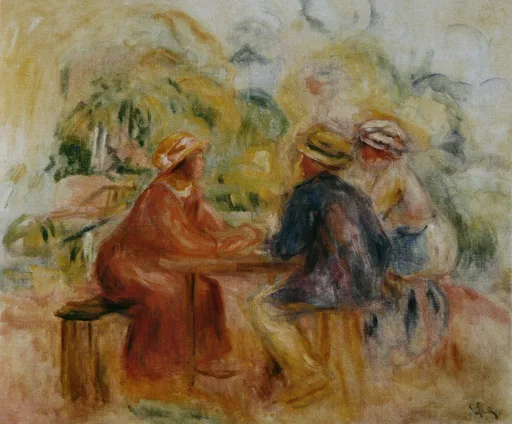
Gathering in the Garden
From $109 -
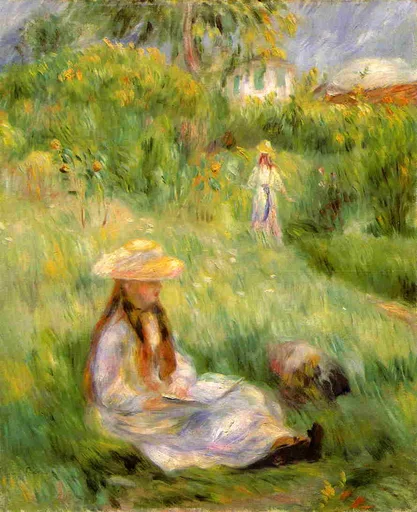
Girl in the Garden at Mezy
From $109 -
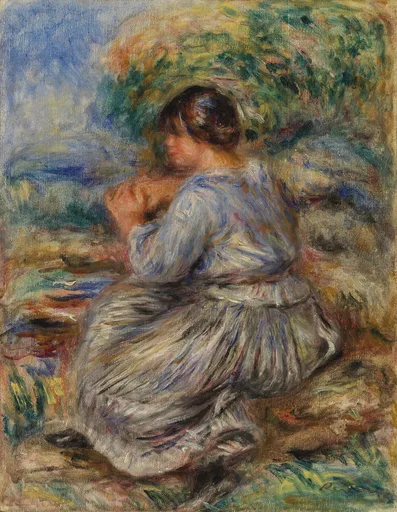
Girl Seated in a Landscape (Jeune fille assise dans un jardin)
From $109 -
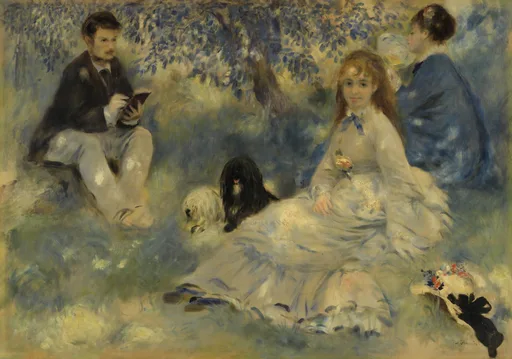
Henriot Family (La Famille Henriot)
From $109 -
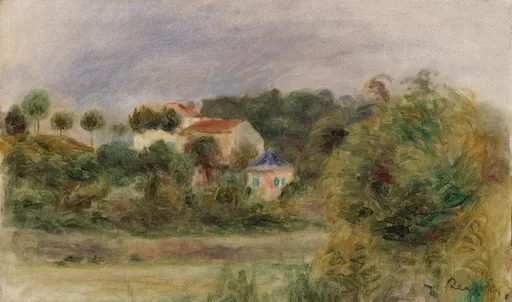
Houses in a Park (Maisons dans un parc)
From $109 -
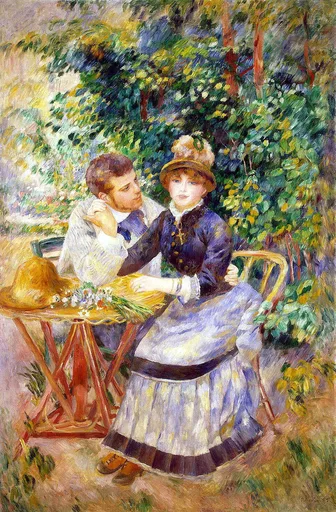
In the Garden
From $109
Dappled light, and the scandal of it
When Renoir showed The Swing and the Moulin de la Galette pictures in 1877, the patches of violet shadow on white dresses were the thing critics attacked. The convention was that shadow was brown. Painting it as blue and violet, and letting it fall in disconnected patches, looked like disease to a viewer trained on the Salon.
It is now the most instantly recognisable thing about him, and it is why these garden pictures still feel like sunlight rather than like a description of sunlight.
Gardens as private rooms
The gardens Renoir painted are enclosed places: a wall, an arbour, a terrace with a rail. That enclosure is what makes them work on an interior wall. The picture does not open into distance the way a landscape does; it offers another room, roughly the size of the one you are standing in, with better weather.
Which room this collection suits
Rooms that could use a window they do not have. An interior hallway, a dining room with one small window, a north-facing sitting room. They are also the right choice above a bed, since the mood is calm and there is no eye contact to keep you awake. Because the composition is usually foliage filling the frame, these tolerate being hung slightly higher than a portrait, and eighty to one hundred and ten centimetres is a comfortable size.
Frequently asked questions
What is dappled light?
Sunlight falling through leaves, which breaks it into patches of light and shade. Renoir painted those patches as separate touches of violet, blue and gold rather than smoothing them into an even shadow, and it is the most characteristic thing in his work.
Are there figures in these pictures?
Usually, but not always. Most of the garden pictures include one or more people at ease under the trees; a few are pure garden, with a path or a bed of flowers and no one in them.
Which garden is which?
The best known are the garden in the rue Cortot in Montmartre, where he painted The Swing, and later his own gardens at Fontenay and at Les Collettes in Cagnes. Several others belong to friends and patrons.
Do these work in a dark room?
They are among the best choices for one. The palette is high-key and the subject is sunlight, so a garden picture on a wall in a dim hallway does a good deal of work. Avoid glass if the room has strong artificial light, since reflections will fight the surface.