
Women & Figures Collection: Pierre-Auguste Renoir Oil Painting Reproductions
The female figure was Renoir’s subject for sixty years, and these 268 works are the broad current of it: models in the studio, women reading and sewing, standing figures caught against light, half-length studies made for the pleasure of the paint. They are not portraits in the strict sense, because the person is rarely the point. What holds the picture together is the meeting of skin, fabric and daylight, and Renoir’s conviction that a painting should be a pleasant thing to live with. He said so plainly, and critics held it against him for a century. Seen on a wall rather than in an argument, the position is easier to understand: these canvases are warm without being sentimental, and they carry a room rather than dominate it. The later works, painted at Cagnes with Gabrielle and other local models, glow with the reds and corals that made his last decade unmistakable.
Showing 1–16 of 310 results
-
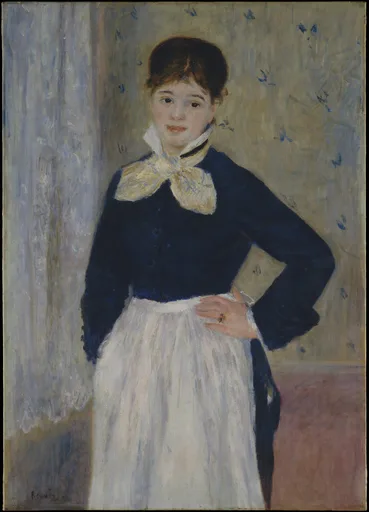
A Waitress at Duval’s Restaurant
From $109 -
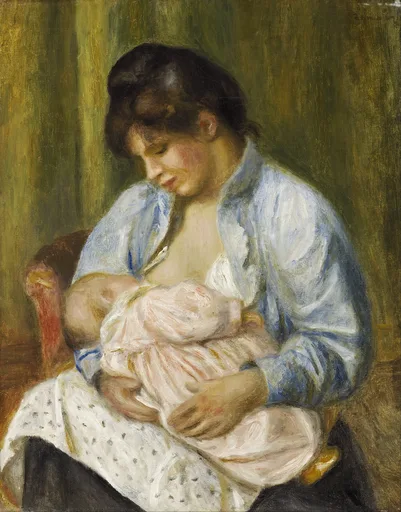
A Woman Nursing a Child
From $109 -
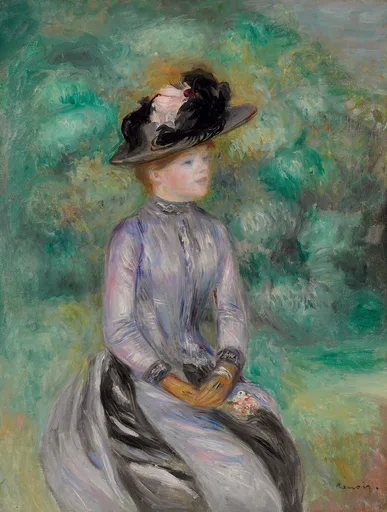
Adrienne
From $109 -
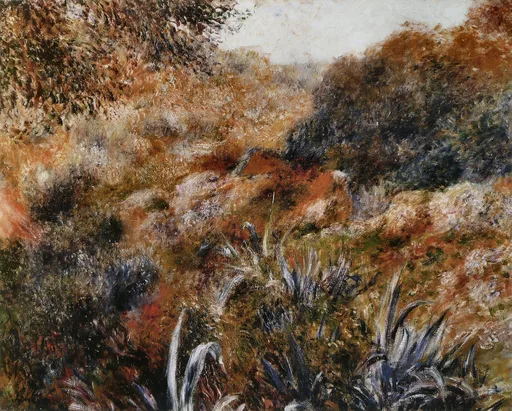
Algerian Landscape, the Ravine of the Wild Woman
From $109 -
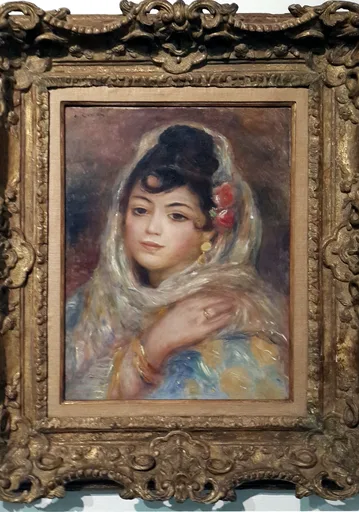
Algerian Woman
From $109 -
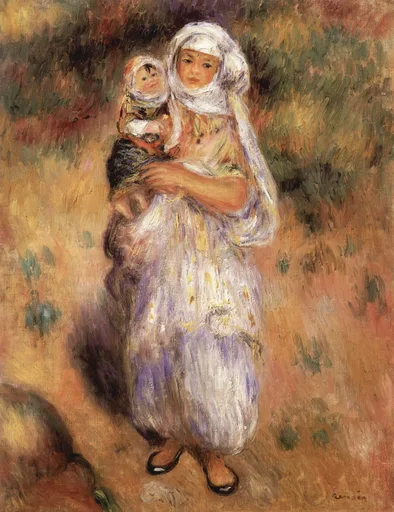
Algerian Woman with Child
From $109 -
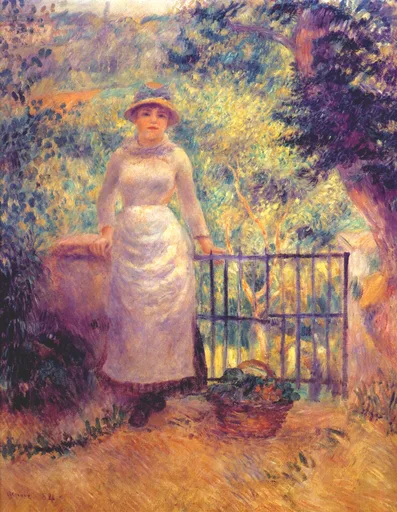
Aline at the Gate
From $109 -
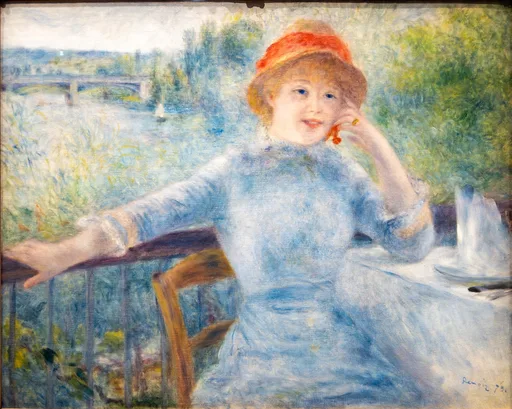
Alphonsine Fournaise
From $109 -
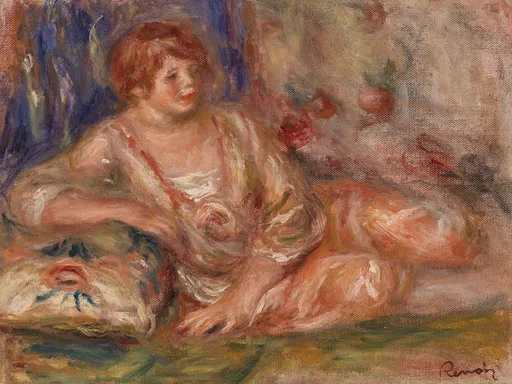
Andrée in Pink, Reclining (Andrée en rose étendue)
From $109 -
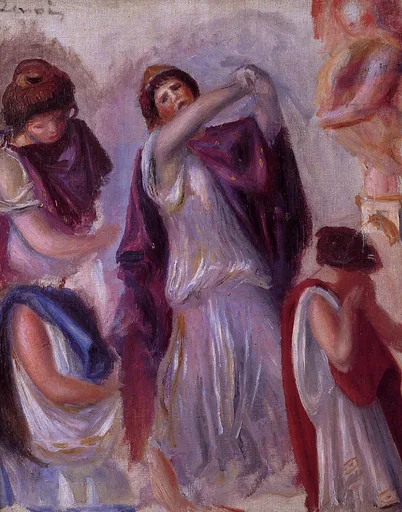
Antique Scene, Women in Peplums
From $109 -
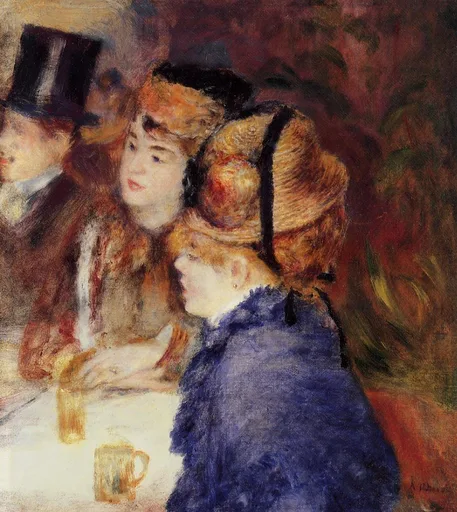
At the Café
From $109 -
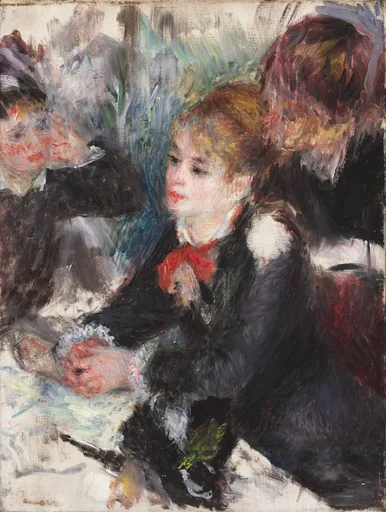
At the Milliner’s
From $109 -
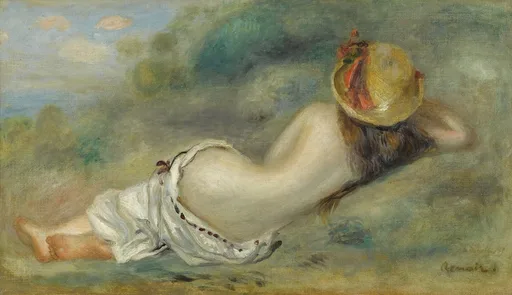
Bather Lying on Her Back with a Straw Hat or Woman Lying on the Grass
From $109 -
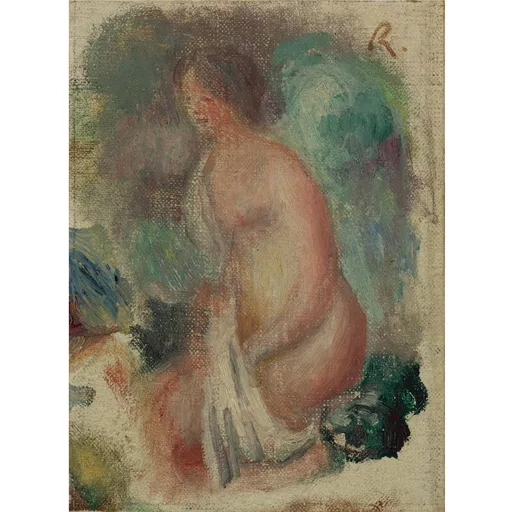
Bathing Woman
From $109 -
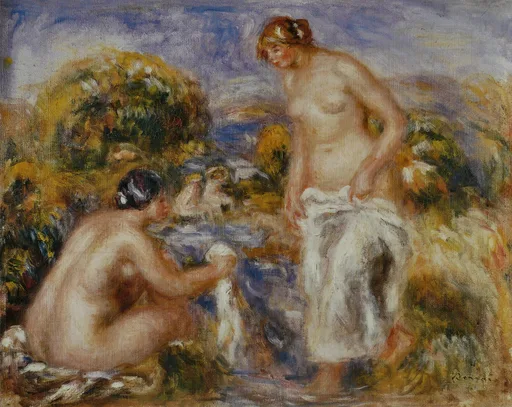
Bathing Women
From $109 -
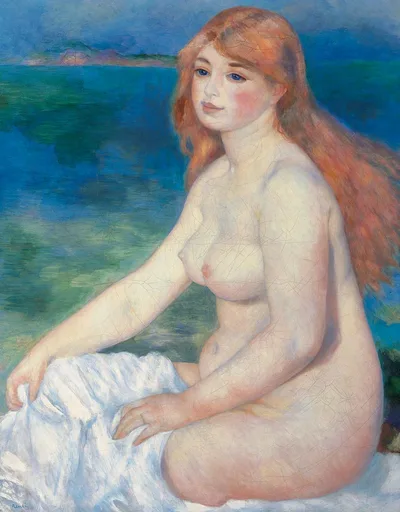
Blonde Bather
From $109
From the studio to the garden
The early figures are Parisian: milliners, actresses, women at a table or in a box at the theatre, painted in the flat north light of a studio. By the 1890s the setting moves outdoors and southwards, and the figure is placed among leaves and dappled sun, which suited a painter who never liked a hard edge.
Gabrielle Renard arrived in 1894 as nursemaid to Jean and became the model of the late years. She appears sewing, holding a rose, opening a blouse, playing with the children, and in a long series of half-length studies where the subject is simply warm flesh in warm light.
A palette built on warmth
Renoir's colour is overwhelmingly warm: rose, coral, gold, and greens that lean yellow. Two practical consequences follow. On a cream or terracotta wall these paintings merge with the wall and lose their glow, so a cooler or whiter wall serves them better. And in a north-facing room, where daylight is blue, a Renoir figure does something almost nothing else does: it warms the room.
Which room this collection suits
These are companionable pictures rather than statement pieces, which makes them unusually easy to place: a bedroom, a landing, a study, the wall beside a sofa. They tolerate being hung slightly higher than a portrait because the whole figure carries the composition. Sixty to ninety centimetres on the long side suits most walls; above a bed or a sideboard, measure the furniture and aim for half to two thirds of its width.
Frequently asked questions
How is this different from the Portraits collection?
A portrait is about a named person. These figure paintings use a model as a subject: the same woman may appear in twenty canvases under no name at all. If you want a specific sitter, look in Portraits; if you want the light on a shoulder, look here.
Who is Gabrielle?
Gabrielle Renard, a cousin of Renoir's wife, joined the household in 1894 to help with the children and became his principal model for two decades. She is the dark-haired woman in a great many of the late works, and she is often named in the title.
Are these suitable for a shared room?
Most are, and that is worth checking before you buy. This collection is clothed figures and half-length studies. The frankly nude works are gathered separately under Bathers and Nudes, so you can choose deliberately rather than by accident.
What frame suits them?
Warm dark wood or a muted, knocked-back gold. Avoid bright gold leaf: against a palette already built on gold and rose it is gold on gold, and the painting loses its glow. Our framing guide goes through the options.