
The Seine & Boating Collection: Pierre-Auguste Renoir Oil Painting Reproductions
For a decade the stretch of the Seine downstream from Paris was Renoir’s summer subject, and these 70 works come from it: La Grenouillere at Croissy, the restaurant terrace at Chatou, sailing boats and rowing skiffs, oarsmen in straw hats, and the river itself broken into hundreds of small strokes of blue, green and white. This is where Impressionism was worked out. In 1869 Renoir and Monet set their easels side by side at the same bathing place and painted the same water, and the difference between the two canvases is the clearest lesson available in what each man wanted. Renoir’s is warmer, more crowded, more interested in the people on the pontoon than in the light on the water. The boating pictures also gave him the setting for his largest and best loved composition, the luncheon on the balcony at Chatou, with its striped awning and its table of friends.
Showing 1–16 of 77 results
-
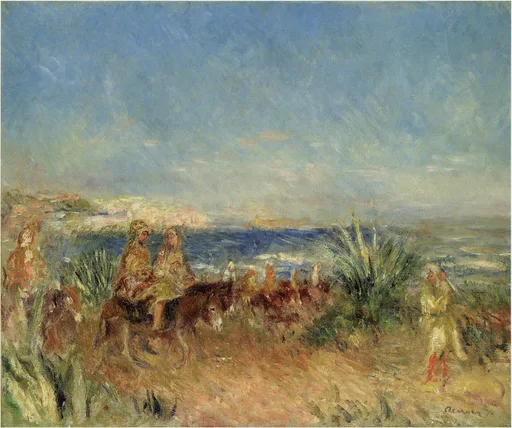
Arabs on Donkeys
From $109 -
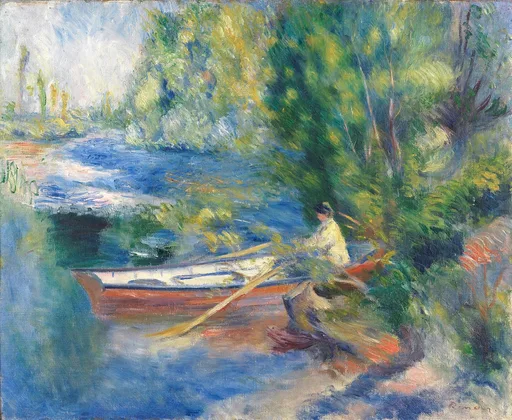
At the water’s edge
From $109 -
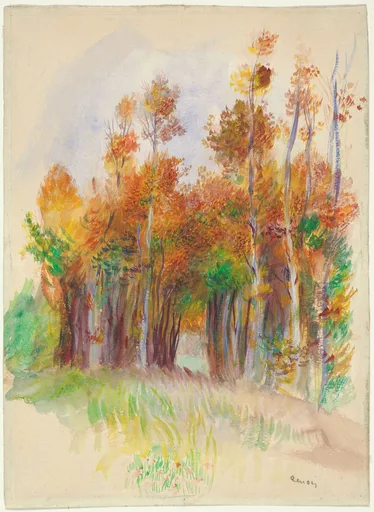
Autumn Grove
From $109 -
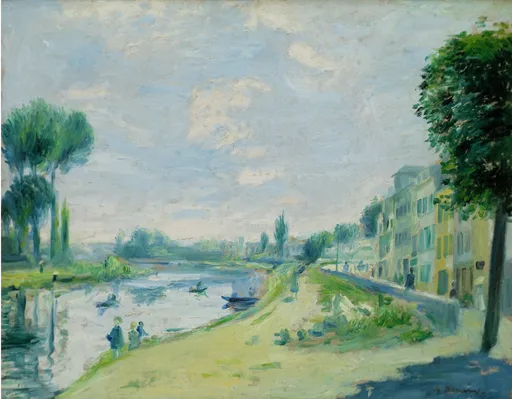
Banks of the Seine, Bougival
From $109 -
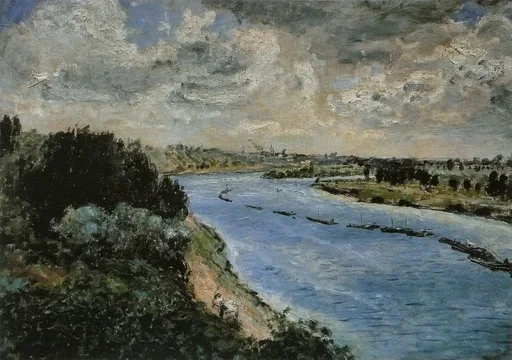
Barges on the Seine
From $109 -
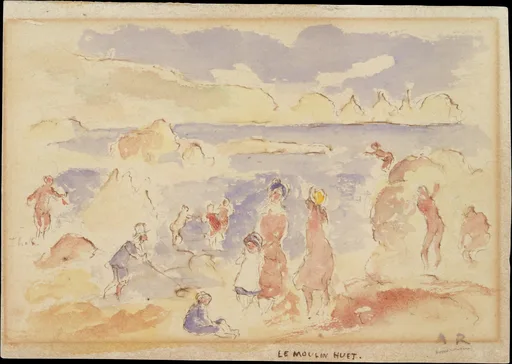
Beach Scene
From $109 -
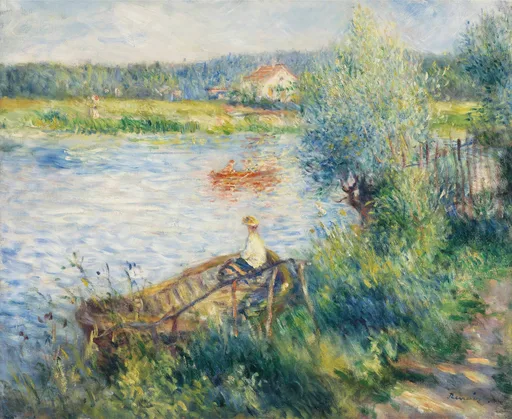
Boating at Bougival
From $109 -
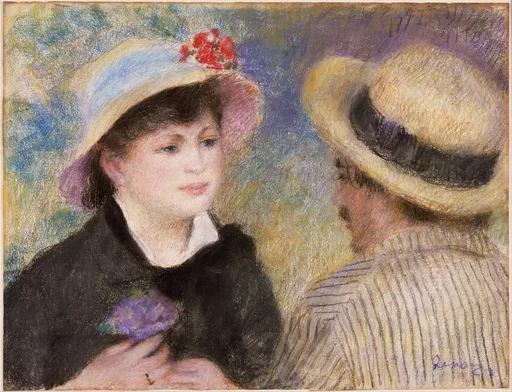
Boating Couple (said to be Aline Charigot and Renoir)
From $109 -
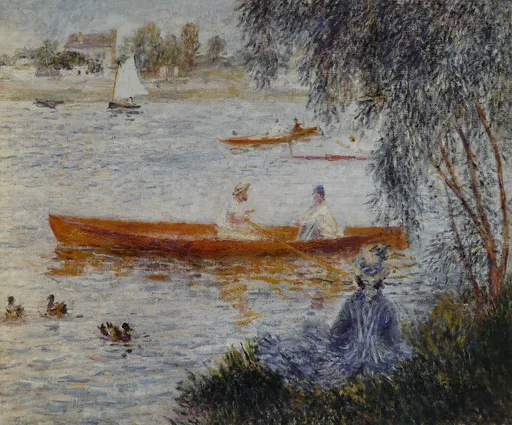
Boatmen at Argenteuil
From $109 -
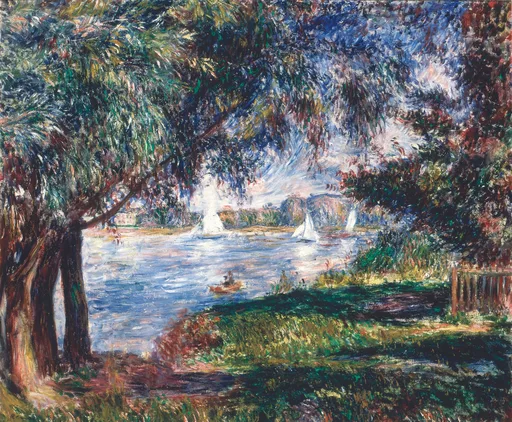
Bougival
From $109 -
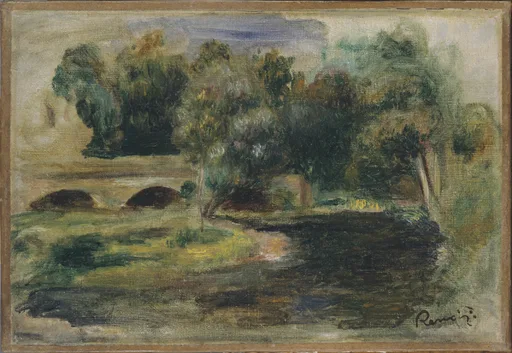
Bridge Over a River
From $109 -
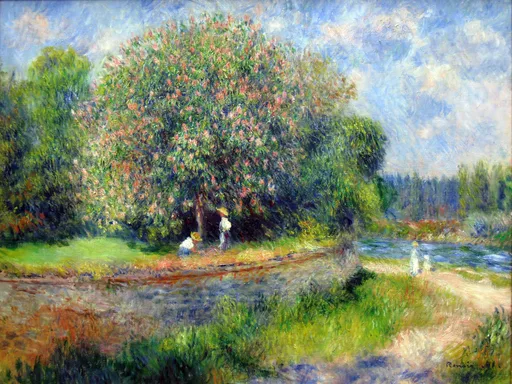
Chestnut in Blossom
From $109 -
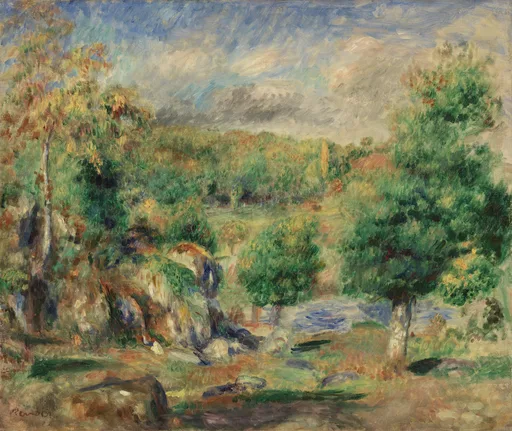
Chestnut Trees, Pont-Aven (Châtaigniers, Pont-Aven)
From $109 -
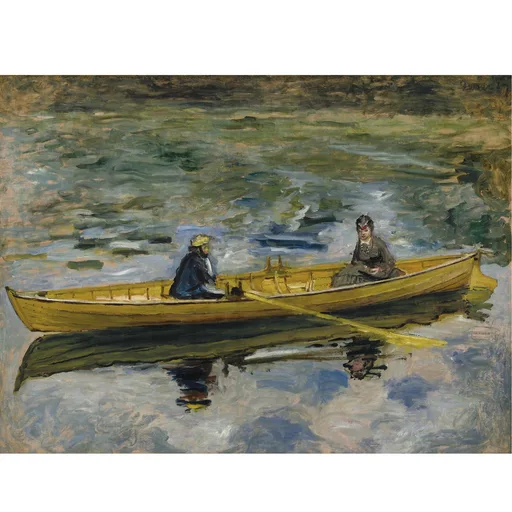
Claude Monet and Mme Henriot
From $109 -
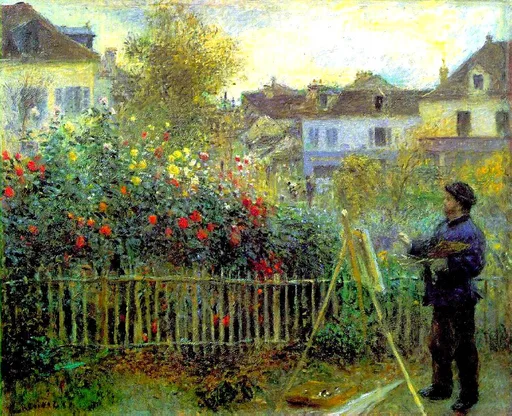
Claude Monet Painting in His Garden at Argenteuil
From $109 -
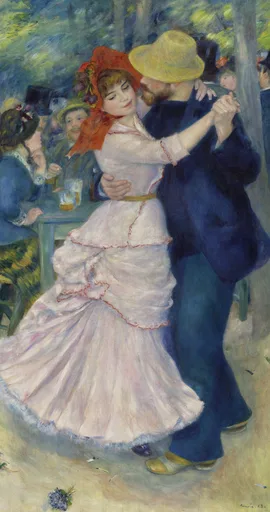
Dance at Bougival
From $109
Croissy, Chatou and the invention of a style
La Grenouillere was a floating cafe and bathing place on an island at Croissy, popular with Parisians who came out by train for the day. In the summer of 1869 Monet and Renoir painted there together, in short broken strokes, because nothing slower could keep up with moving water and moving crowds. It is the moment the technique arrives.
A decade later Renoir was working at the Maison Fournaise at Chatou, a riverside restaurant with a first floor balcony, and using its regulars as models. The boating world of the period was a genuine subculture of rowers, sailors and their friends, and he painted it from inside it.
Water, and what it does to a wall
These are the coolest paintings Renoir made. The blues and greens of the river give the group a temperature the rest of his catalogue does not have, which makes it the easiest choice for a room that is already warm. They also carry a strong horizontal, so they suit wide walls, and the eye reads them comfortably from a distance.
Which room this collection suits
Wide formats above a sofa, a sideboard or a bed; the crowd scenes need size, the empty river views do not. In a warm room, or one with terracotta or wood tones, the cool water palette gives relief. Avoid hanging them opposite a bright window, since the surface of a river painting is largely pale and reflective and glare washes it out.
Frequently asked questions
Is Luncheon of the Boating Party in this collection?
Yes, along with the studies and related canvases painted at the Maison Fournaise at Chatou, and the earlier Grenouillere pictures from Croissy.
What is La Grenouillere?
A floating cafe and bathing place on the Seine at Croissy, reached by train from Paris and popular through the 1860s and 1870s. Renoir and Monet painted there together in 1869, and those canvases are usually treated as the first fully Impressionist paintings.
Are these seascapes?
No. They are river scenes, mostly with people, boats and riverbank buildings in the frame. If you want open water and coastline, look in the Landscapes collection, which includes the Brittany and Normandy coasts.
What size do the crowd scenes need?
Larger than the empty river views. A boating party canvas holds a dozen faces, and below about eighty centimetres on the long side those faces stop reading as people. Our sizing guide gives the thresholds.