
Flowers & Bouquets Collection: Pierre-Auguste Renoir Oil Painting Reproductions
Renoir painted flowers to rest his hand, and said as much: working on a bouquet let him experiment with tone and touch without the responsibility he felt toward a human face. These 86 canvases are the result, and they are the most immediately usable pictures in the whole catalogue. Roses above all, then gladioli, chrysanthemums, anemones and mixed garden bunches crammed into a jug, painted for the pleasure of the paint. Because there is no sitter to satisfy and no composition to resolve, the brushwork is at its loosest and the colour at its purest. A late Renoir rose is barely a rose: it is three or four strokes of cream and carmine that the eye completes. They suit almost any room, they work at small sizes where a figure painting would fail, and they carry his warmth into spaces that could not take a nude or a crowd.
Showing 1–16 of 86 results
-
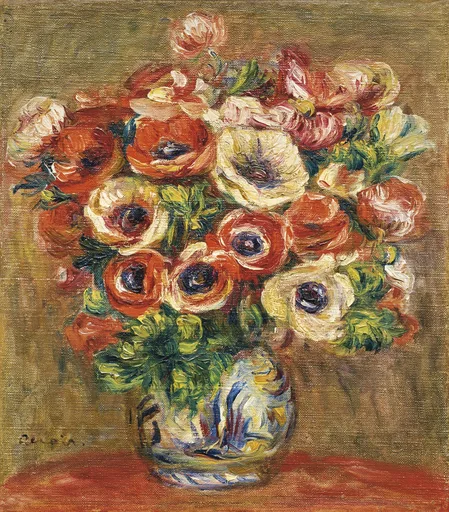
Anemone
From $109 -
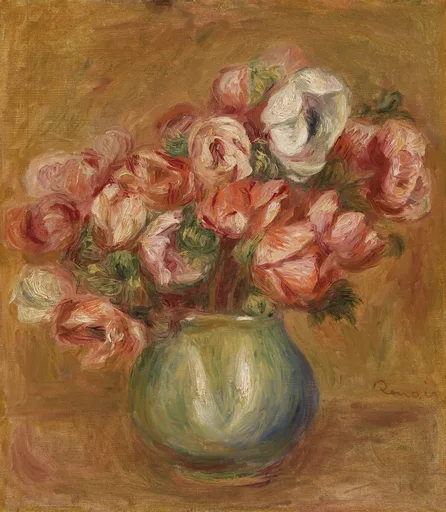
Anemones (Anémones)
From $109 -
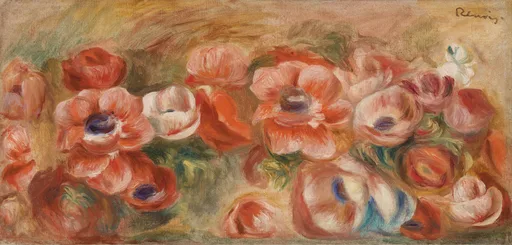
Anemones (Anémones)
From $109 -
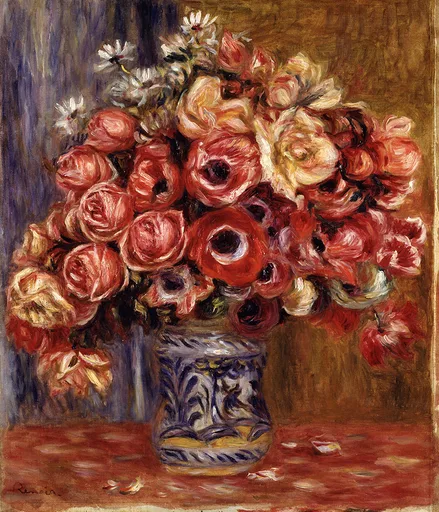
Anemones and Roses
From $109 -
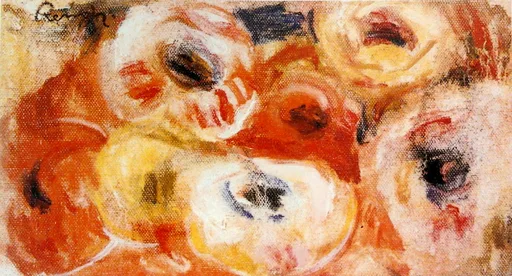
Anemones.
From $109 -
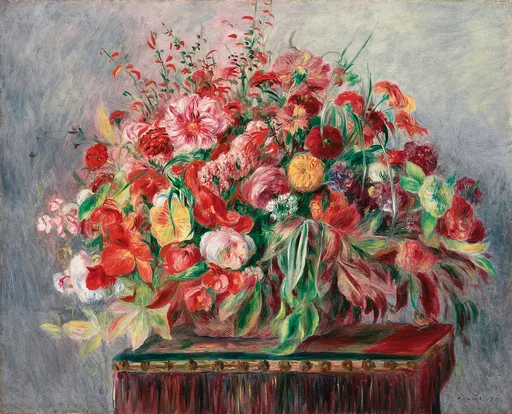
Basket of Flowers
From $109 -
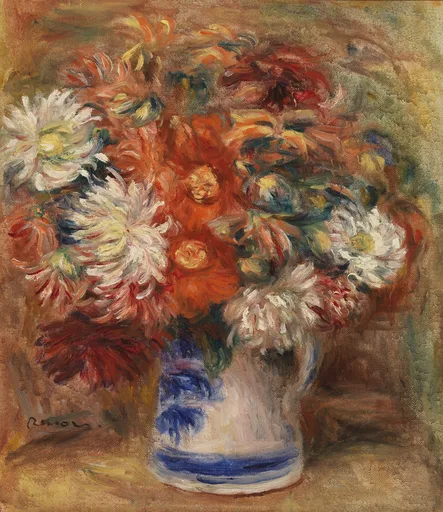
Bouquet
From $109 -
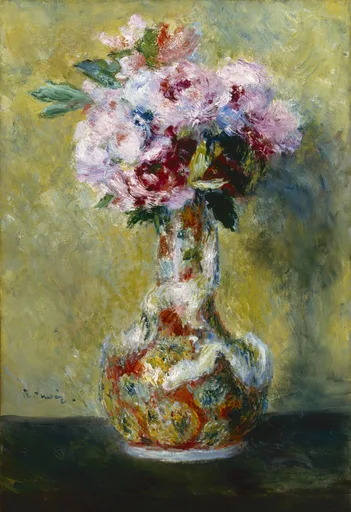
Bouquet in a Vase
From $109 -
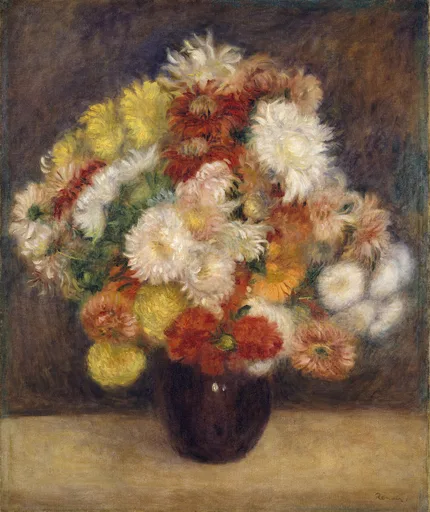
Bouquet of Chrysanthemums
From $109 -
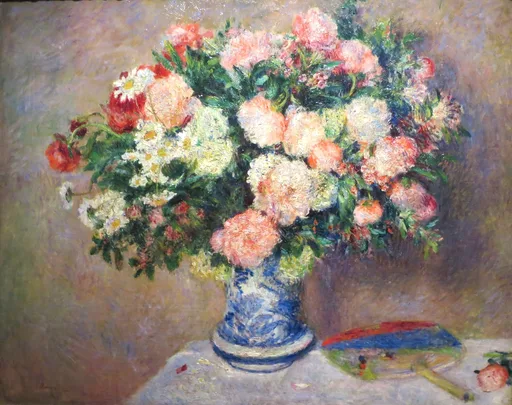
Bouquet of Chrysanthemums and a Japanese Fan
From $109 -
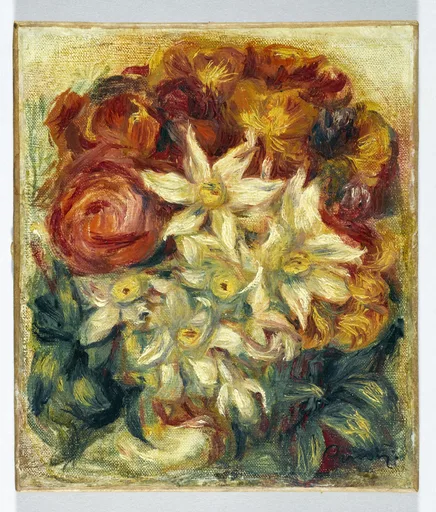
Bouquet of Daffodils and Roses
From $109 -
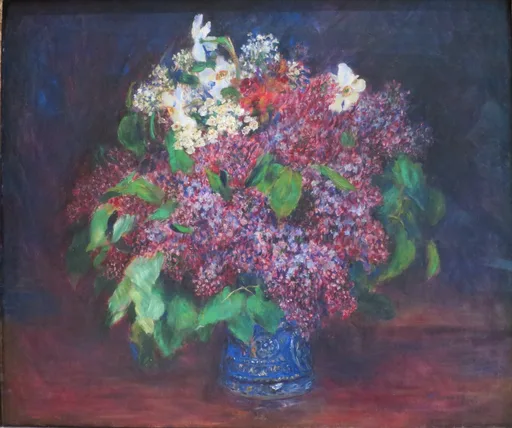
Bouquet of Lilacs
From $109 -
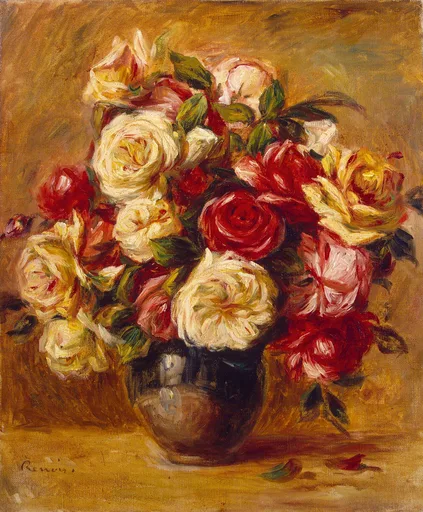
Bouquet of Roses
From $109 -
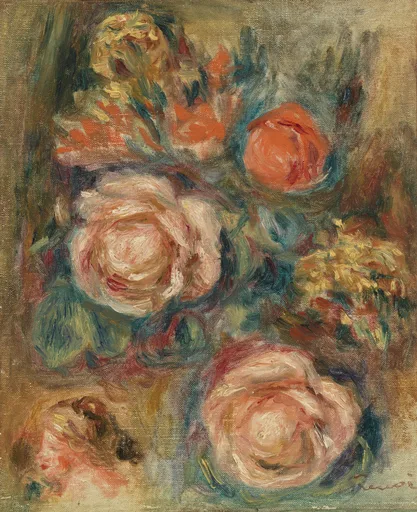
Bouquet of Roses (Bouquet de roses)
From $109 -
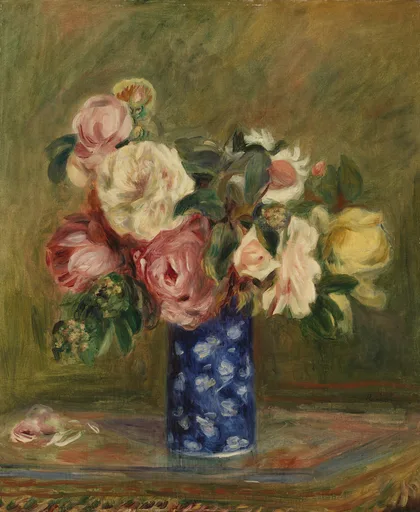
Bouquet of Roses (Le Bouquet de roses)
From $109 -
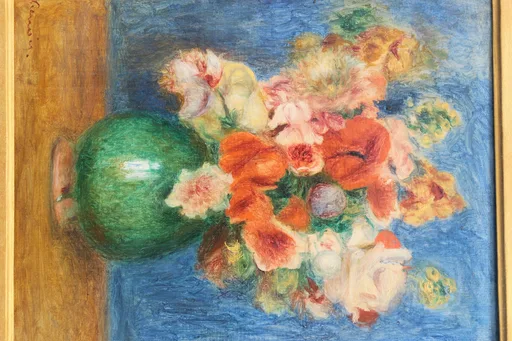
Bouquet Renoir
From $109
The pictures he painted for himself
Flower painting was traditionally the bottom of the academic hierarchy, which is precisely why it was free. Renoir used it as a laboratory. He told Ambroise Vollard that when he painted flowers he could try things on the canvas that he would not dare risk on a figure, and then carry what he learned back to the figures.
The subjects are domestic and unpretentious: garden roses in a glass, a bunch bought at market, chrysanthemums in an ordinary jug. He rarely arranged an elaborate display in the Dutch manner. The interest is entirely in how light sits on a petal.
Small pictures that hold their own
This is the one collection where a small canvas is not a compromise. A rose study at forty centimetres carries a narrow wall, a bathroom, a kitchen or the space between two doors, because there is no detail to lose. It is also the group to choose when a room is already full of pattern or activity: the pictures add colour without adding another conversation.
Which room this collection suits
Anywhere, with one caveat. Kitchens, bathrooms, hallways, stairwells and bedrooms all take them well, and they are forgiving of odd wall shapes. The caveat is background: a warm cream wall swallows the pinks and creams that make these pictures. Give them a cooler or crisper wall, or a frame with a light inner edge that separates the canvas from the paint behind it.
Frequently asked questions
Which flowers did Renoir paint most?
Roses, by a wide margin, and he returned to them all his life. After that, gladioli, chrysanthemums, anemones and mixed garden bunches. He preferred ordinary garden flowers to florists' arrangements.
Are these good for a small wall?
They are the best group in the catalogue for it. Because the subject is a single mass of colour rather than a scene with detail, a flower piece at thirty to fifty centimetres still reads correctly from close range.
Will the colours suit a modern interior?
Usually, yes. The palettes are warm but not loud, and the backgrounds are often neutral greys and olives that sit well against contemporary paint colours. The late roses on dark grounds are particularly good in a room with strong wall colour.
Hand-painted or print for a flower piece?
This is where hand-painted oil shows most clearly, because the petals are built from thick, wet strokes that stand off the canvas. If the picture will hang somewhere you pass close by, the oil is worth it. Details are in our reproduction guide.