In the Garden
A Year of New Fatherhood
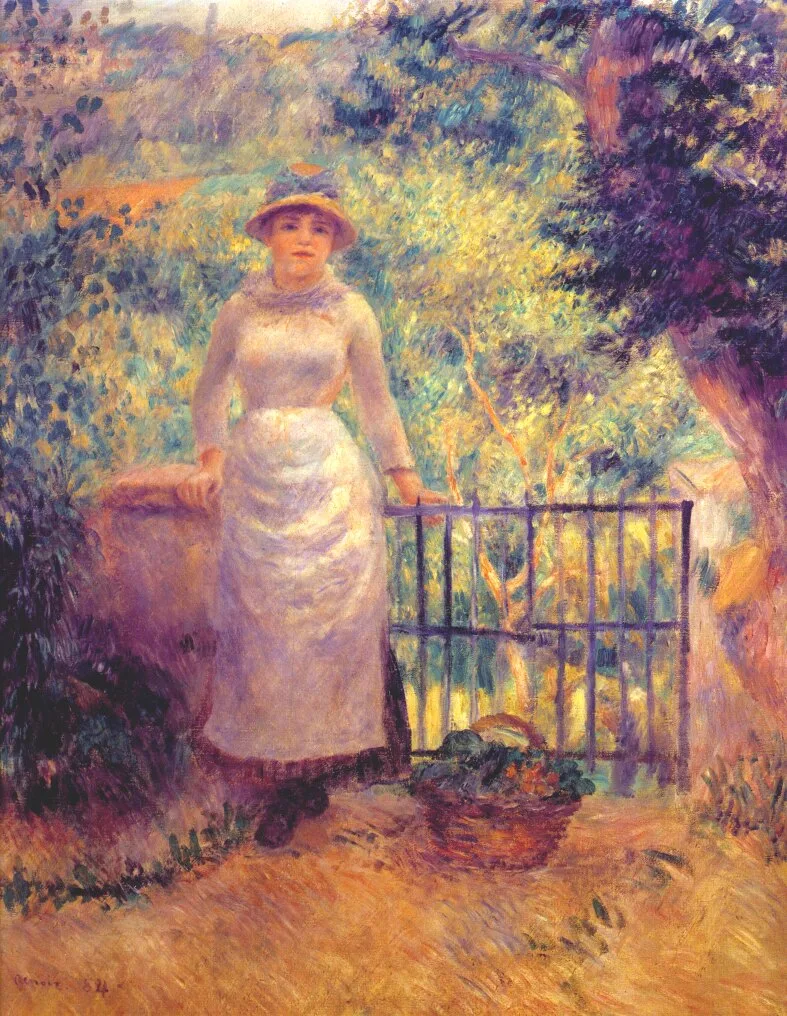
In March 1885 Renoir’s first son, Pierre, was born to Aline Charigot, the young seamstress who had been his companion and frequent model since the early years of the decade and whom he would eventually marry in 1890. In the Garden dates from this same year, a period in which Renoir was dividing his attention between ambitious figure compositions and smaller, quieter outdoor scenes.
The picture belongs to his so-called Ingres period, the years around the mid-1880s when he was pulling away from the loose brushwork of his 1870s Impressionist canvases in search of firmer drawing, a change of direction he had begun to test after a trip to Italy in 1881 and 1882.
Foliage, a Hat, and Dappled Shade
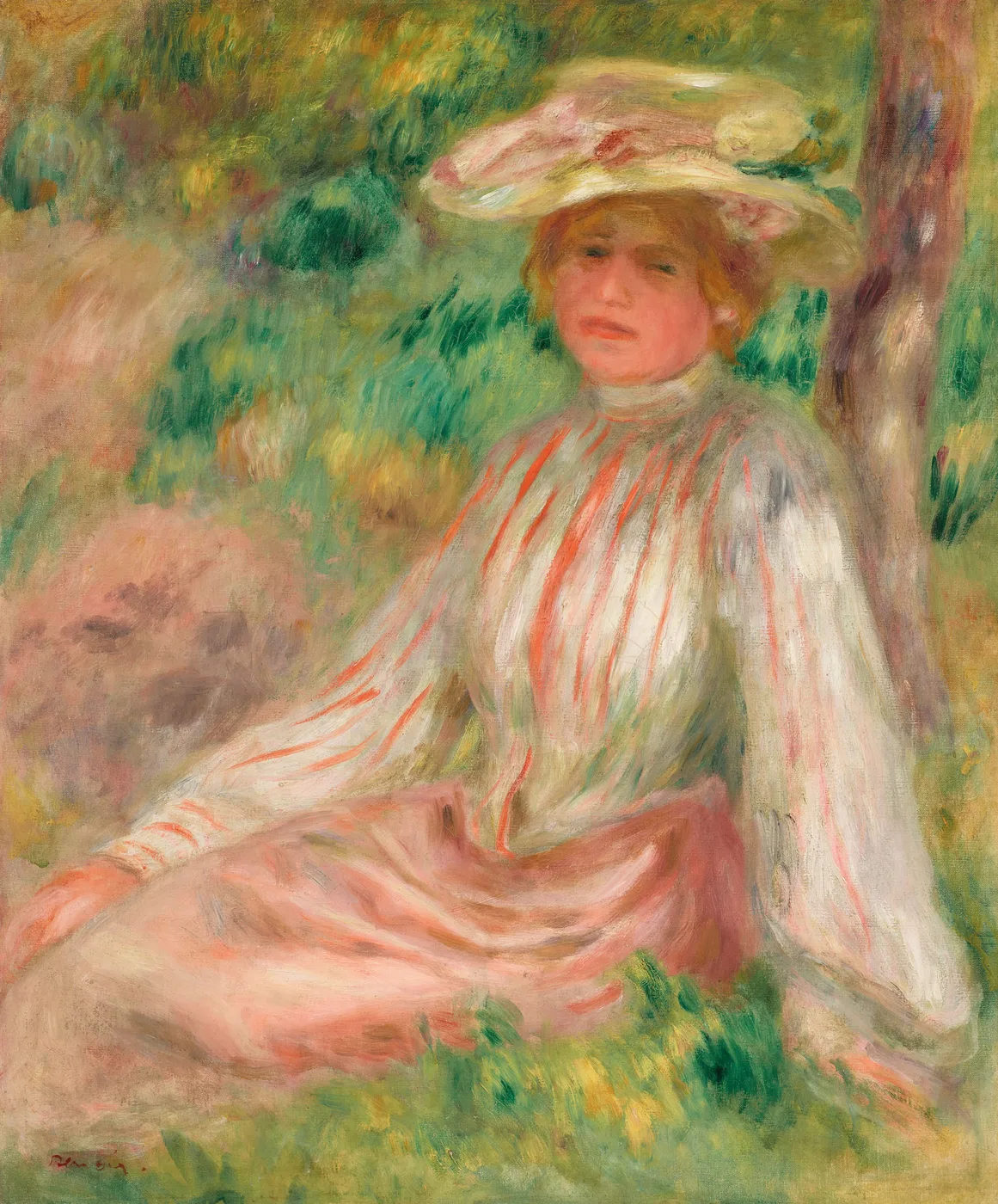
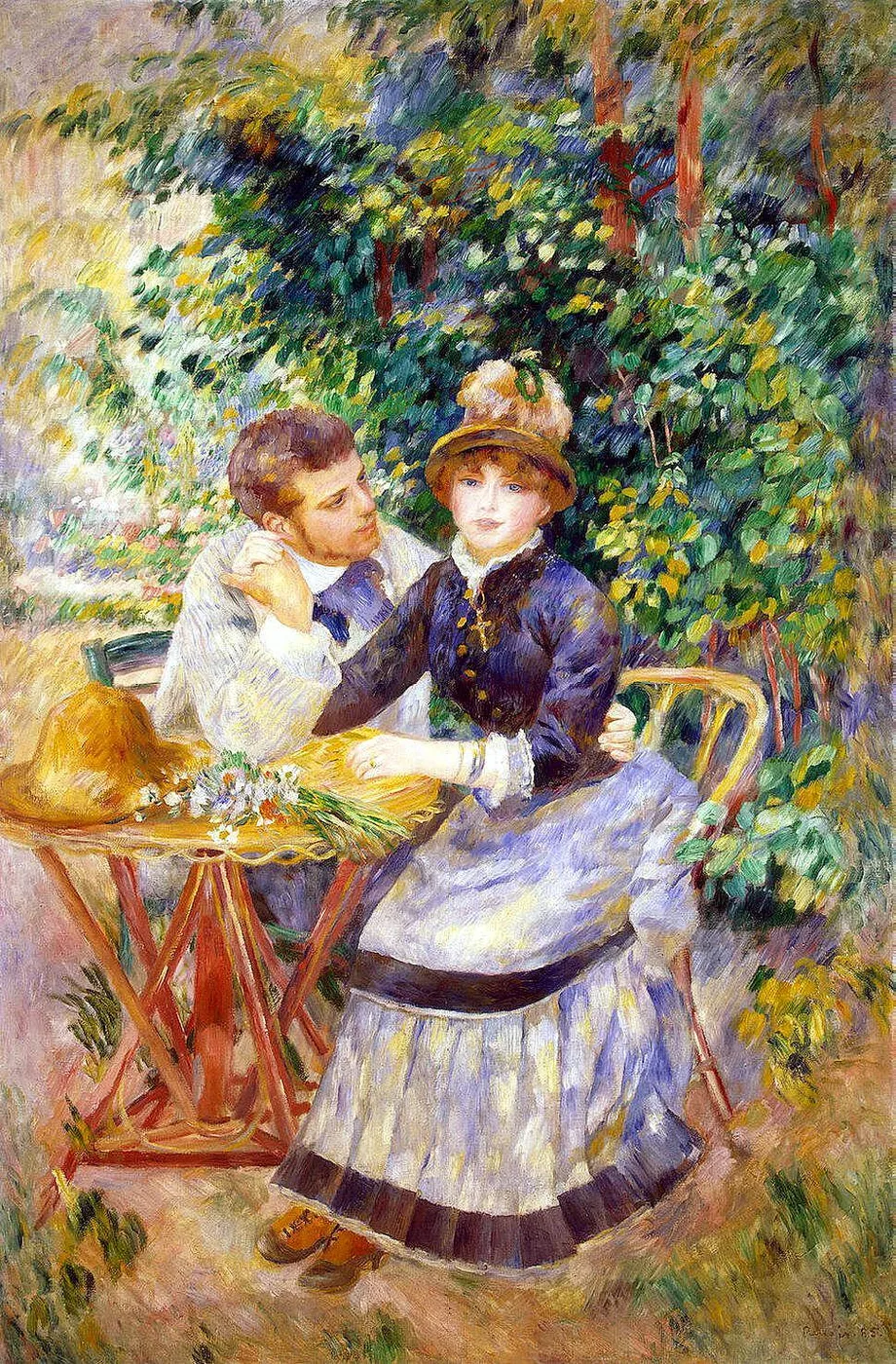
The painting shows a young woman in a garden, seated beneath foliage that breaks the light into small, shifting patches across her figure and the ground around her. She wears a hat, its brim throwing a soft shadow across the upper part of her face, a common device in Renoir’s outdoor portraits of this decade.
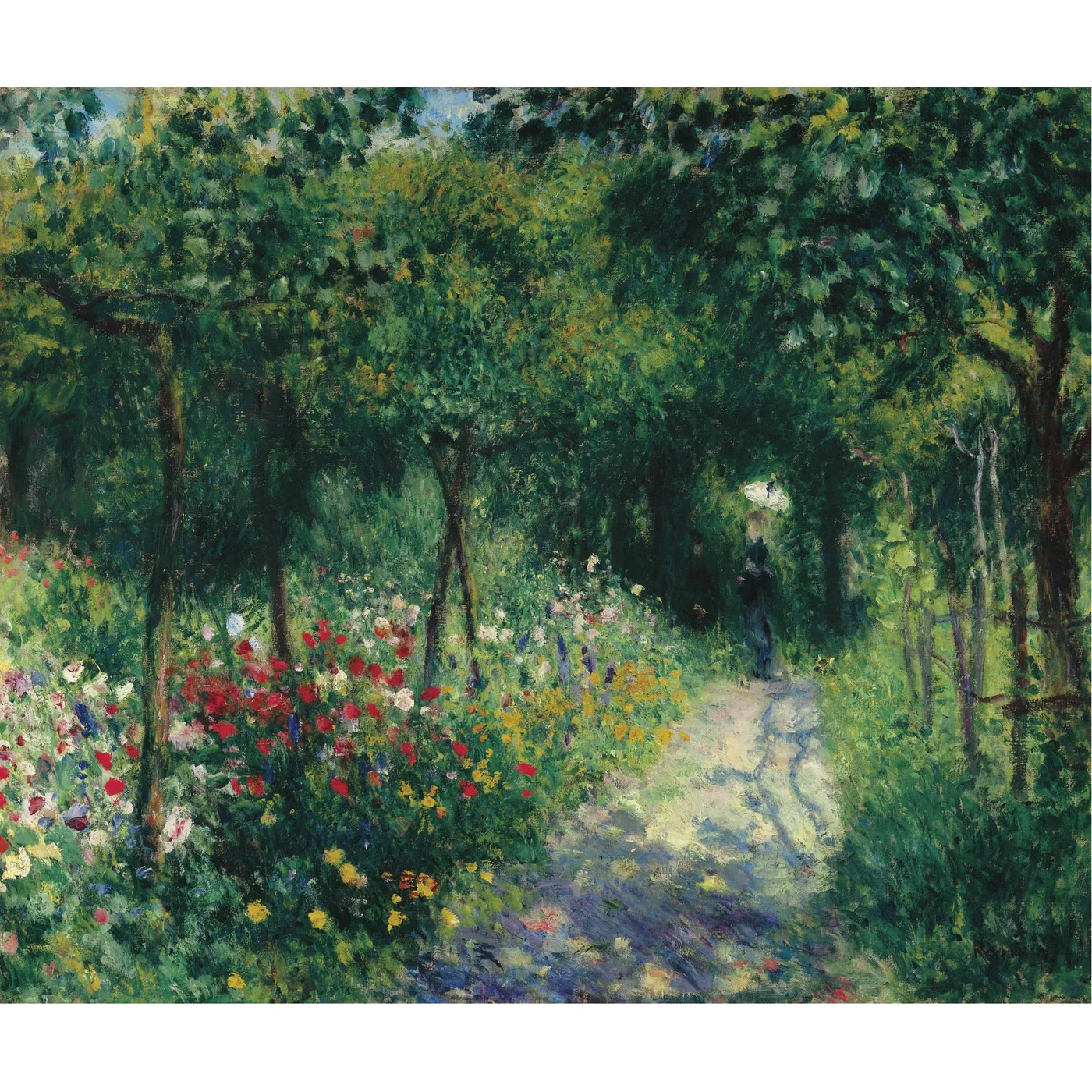
The garden itself is rendered with a density of green and touches of warmer colour, flowers or foliage catching brighter light where gaps in the canopy let the sun through. Renoir keeps the setting relatively shallow, pressing the figure and the greenery close together rather than opening onto any deep view.
Compared with his Impressionist garden scenes of the previous decade, the drawing here is more careful and the forms more clearly separated from one another; leaves and blossoms are still built from small, distinct touches of paint, but the overall structure of the composition is steadier and more deliberate.
Sunlight Filtered Through Leaves
Dappled light was a problem Renoir had returned to many times since the 1870s, when he and Monet had painted the same effect at La Grenouillère and at Argenteuil. In the Garden takes up the challenge again but with the more disciplined touch of his mid-1880s manner, the patches of sun and shade kept legible rather than dissolved into pure flicker.
The palette stays fresh rather than warm, greens and cool whites dominating around the figure, with the flesh tones of the face and hands providing the picture’s main note of warmth. This cooler balance separates the painting from the hot reds of Renoir’s later nudes and ties it firmly to his mid-career interest in daylight observed outdoors.
The woman’s pose is relaxed but self-contained; she does not look out at the viewer, and the picture reads as a captured moment of quiet rather than a formal sitting.
From France to the Hermitage
In the Garden is now held by the Hermitage Museum in Saint Petersburg, part of that museum’s substantial holding of French Impressionist and Post-Impressionist painting, much of it assembled by early twentieth-century Russian collectors before the collections were nationalised.
The Hermitage’s Impressionist rooms give the painting good company, hanging as it does among other garden and outdoor figure scenes from the same decades, allowing a visitor to trace how differently French painters of the period handled the problem of sunlight through leaves.
A Cool Green Painting for a Sunlit Room
Unlike Renoir’s warmer late canvases, In the Garden suits a room that already gets plenty of daylight, since its own palette of greens and cool whites can look muted under artificial light in the evening. In a bright room it comes alive, the small broken touches of paint reading almost like real dappled shade moving across the wall.
There is a stillness to the picture that rewards patience. Nothing happens in it beyond a woman sitting quietly in the shade of a garden, and it is exactly that lack of incident that lets the handling of light carry the whole composition.
Renoir was thirty-four in 1885, already the father of a new son, still several years from the recognition and financial security that would come later in his career. In the Garden shows an artist working carefully, almost cautiously, testing how much of his earlier spontaneity he could keep while giving his forms a steadier structure.
Seen up close, the brushwork in the foliage remains loose and varied, closer to his Impressionist years than the tighter drawing he was applying to the figure at the same date, a reminder that Renoir’s stylistic shifts in this decade were never quite as clean or complete as the usual accounts suggest.
The picture asks to be looked at slowly, in daylight, the way its subject herself seems to be sitting: unhurried, half in shade, waiting for nothing in particular.
Sizes and materials for In the Garden are listed on its product page.