Eugène Murer
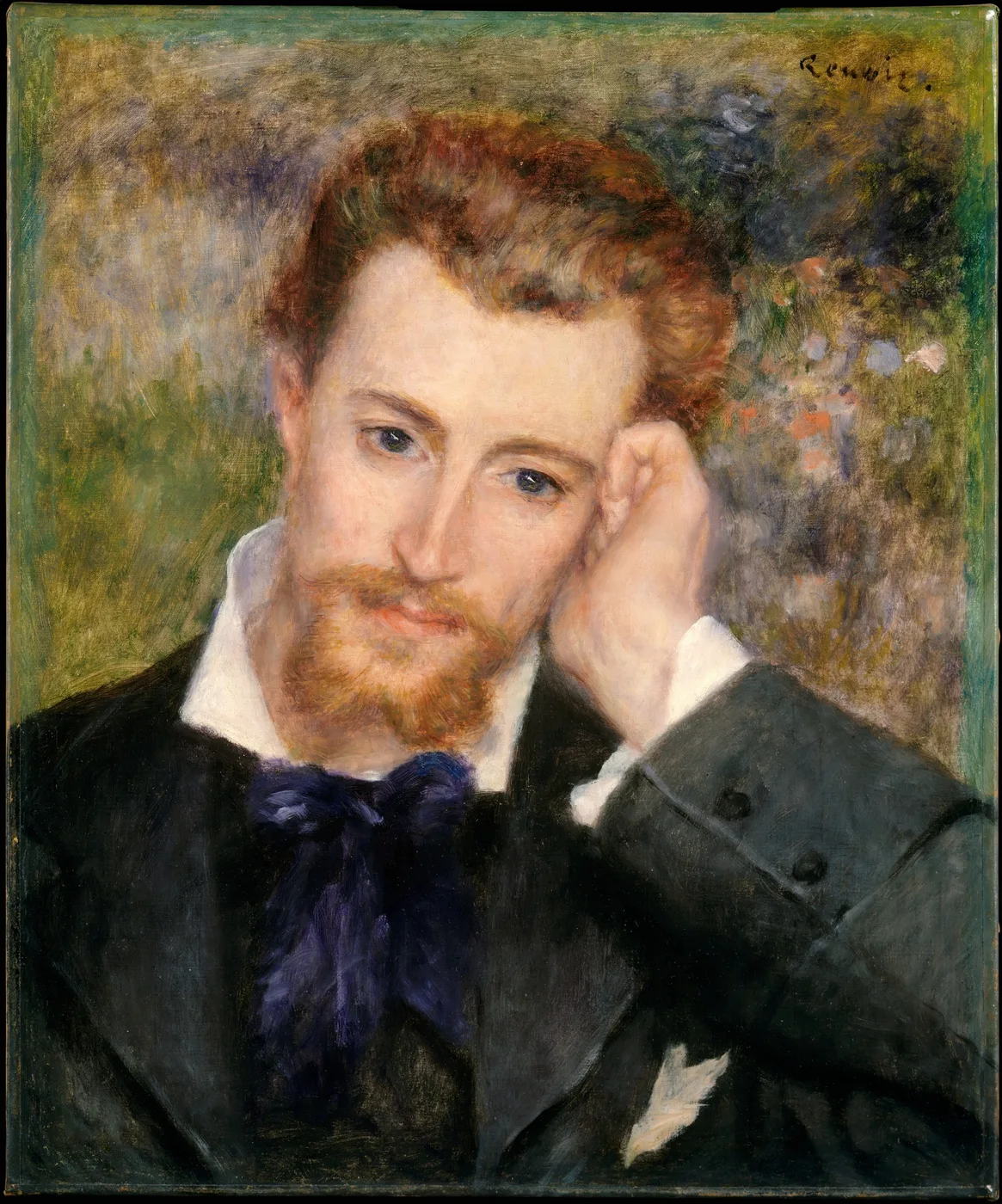
A Baker, a Novelist and a Friend to Painters
In 1877, Pierre-Auguste Renoir was thirty-six and showing his work at the third Impressionist group exhibition, a display that still drew ridicule from most Paris critics and buyers. Money was tight, sales were rare, and Renoir depended heavily on a small circle of early believers willing to buy paintings that the wider art market would not touch.
One of the most important of these believers was Eugène Murer, born Hyacinthe-Eugène Meunier, who ran a pastry shop and restaurant in Paris. He used the modest profits from selling bread and cakes to buy paintings from Renoir, Pissarro, Sisley and Cézanne.
Murer was also a novelist, writing under his birth name of Meunier, and his dinners became a gathering point for painters who could barely sell a canvas elsewhere. In 1877 Renoir painted his portrait, one of several likenesses the two men exchanged for one another’s work and hospitality.
A Patron Who Understood the Impressionists Before Most Did
What set Murer apart from other early collectors was not wealth, since he had comparatively little of it, but conviction. He bought Impressionist paintings when critics were still calling them unfinished sketches, when Salon juries were rejecting them outright, and when most of Paris regarded the whole enterprise as a joke.
Renoir, Pissarro and Sisley in particular depended on Murer’s generosity in the mid-1870s, sometimes trading paintings directly for meals or small sums of money. His restaurant became something close to an informal gallery, its walls hung with canvases that would later be worth vastly more than the meals they had paid for.
Reading the Canvas
Renoir paints Murer close to half-length, facing the viewer with a directness that suits a portrait made between friends rather than for a paying stranger. The handling is warm and economical, built up from the loose, confident brushwork Renoir was refining across his Impressionist portraits of these years.
Light falls gently across Murer’s face, picked out in the same soft pinks and creams Renoir used for every sitter, while his clothing and the surrounding space are treated more broadly, with less finish, so that the face remains the clear centre of attention. There is little in the background to distract from the sitter himself.
The portrait carries none of the stiffness of a commissioned society likeness. Murer sits comfortably, without an obvious pose being struck for the occasion, which fits what is known of the relationship between the two men: this was a picture made among friends, not for a fee.
A Small Portrait with an Outsized Story
Portraits like this one matter to the history of Impressionism in ways their modest scale can obscure. Murer’s willingness to buy, display and champion this circle of painters helped some of them survive financially through years when almost nobody else would take a chance on their work.
He would go on to assemble one of the more significant early collections of Impressionist painting, much of it acquired directly from artists who had few other outlets for their work. Renoir’s portrait of him stands as a kind of thank-you, painted in the same free, sunlit style that Murer’s patronage had helped keep afloat.
From a Paris Dining Room to the Metropolitan Museum of Art
The portrait of Eugène Murer is now held at the Metropolitan Museum of Art in New York, alongside a substantial holding of Renoir’s work spanning his career from the 1870s to his final years. It sits there as a document of friendship as much as a study in likeness.
Seen today, the picture asks a viewer to think about how Impressionism actually survived its difficult early years, not through Salon prizes or critical approval but through a small, loyal network of dealers, collectors and friends willing to buy paintings nobody else wanted. Murer was one of the most important people in that network.
The portrait’s modest size and unassuming subject, a Paris baker rather than a famous sitter, make it easy to walk past in a museum full of grander pictures. Slowing down in front of it reveals a warmth of handling that Renoir reserved for people he knew well.
There is a quiet intimacy in the way Renoir has painted Murer’s expression, attentive without being formal, that separates this picture from the more polished commissions Renoir undertook for wealthier clients during the same period. It reads less like a transaction and more like a record of gratitude.
Few visitors searching for Renoir’s best-known garden parties and portraits of fashionable women will stumble across this picture by accident. Yet it tells a part of the Impressionist story that the more famous canvases leave out entirely, the story of who paid the bills.
Sizes and materials for Eugène Murer (Hyacinthe-Eugène Meunier, 1841–1906) are listed on its product page.