William Sisley
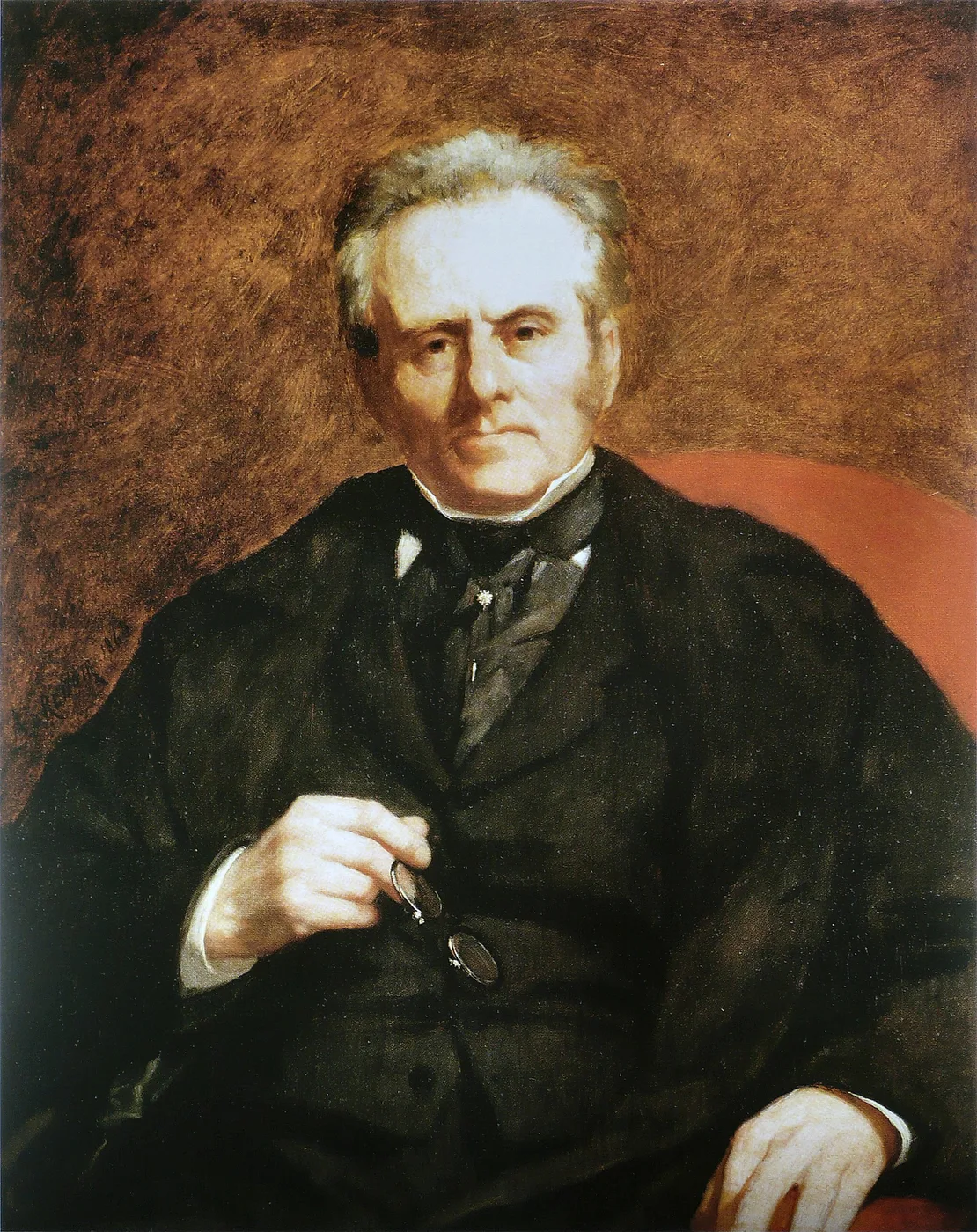
In 1864 Pierre-Auguste Renoir was twenty-three years old and still a student, enrolled at the private Paris atelier of the Swiss painter Charles Gleyre, where formal instruction was cheap and discipline relatively loose. It was there that he met three fellow students who would remain central to his life and career: Claude Monet, Frédéric Bazille and Alfred Sisley, an Englishman raised in Paris who shared Renoir’s growing impatience with academic convention.
William Sisley was Alfred’s father, a prosperous English businessman who had settled in Paris and built a comfortable life for his family there. Portraits of a friend’s parent were a practical way for a young painter to gain sitters and practice, and Renoir’s picture of the elder Sisley belongs to this early, formative period, well before Impressionism had taken shape as a recognisable style.
A Portrait Painted Among Friends
The painting is a straightforward, close-cropped portrait: William Sisley shown from the chest up, his face and expression carrying the full weight of the composition. There is none of the broken colour or visible dabbing brushwork that would later define Renoir’s mature Impressionist manner. Instead the paint is applied more smoothly, the modelling of the face built up through careful gradations of light and shadow.
Sisley is dressed formally, in a dark coat and white collar typical of a Victorian-era businessman’s daily attire, nothing about the clothing suggesting artistic bohemia. The overall impression is of solidity and respectability, qualities Renoir renders through firm, unhurried brushwork rather than through any flourish.
The background is kept dark and largely undefined, a plain field against which the sitter’s face and the pale collar of his shirt stand out. This kind of restrained, tonal setting was standard practice for portraiture aimed at the official Paris Salon, the exhibition young painters like Renoir still needed to satisfy if they wanted recognition and sales.
The Englishman Behind an Impressionist Painter
Alfred Sisley would go on to become one of the most consistent landscape painters among the Impressionists, exhibiting alongside Renoir, Monet, Pissarro and Degas through the 1870s and beyond. His father’s portrait offers a rare, documented glimpse of the family circumstances that supported the younger Sisley in his early years as an art student, before financial setbacks later in the decade changed the family’s fortunes considerably.
Little is recorded about the sittings themselves, but the finished portrait suggests a degree of familiarity between painter and subject, an ease not always present in commissioned Salon portraits of strangers. It stands as one of the more personal documents from Renoir’s student years, made for friendship rather than a fee.
Renoir and Alfred Sisley remained close throughout their lives, and this portrait is one of several points of contact between the two families visible in Renoir’s early output. Painting a friend’s father was also, practically, a way of testing his skills as a portraitist on a sympathetic, patient sitter rather than a paying stranger.
Before the Light Changed: Renoir’s Early Realism
What stands out in this canvas, seen against Renoir’s later work, is how conventional it looks. The debt to painters like Gustave Courbet and to the broader tradition of Realist portraiture is clear in the dark, earthy palette and the solid, sculptural handling of the face. There is little sign yet of the pale, sunlit colour Renoir would develop later in the decade once he began painting outdoors with Monet.
That contrast is part of what makes the picture historically interesting. It shows a serious, technically careful young painter working within the expectations of his training, some years before he and his Gleyre studio friends began pushing against those same expectations at La Grenouillère and eventually in the independent exhibitions that came to be called Impressionist.
The brushwork around the sitter’s coat and shoulders is looser than around the face, a small early sign of the more spontaneous handling Renoir would later apply across an entire canvas rather than reserving it for peripheral detail. His attention, though, is concentrated on the sitter’s features, rendered with real attentiveness to individual likeness.
A Sober Face in a Room of Colour
The portrait is held today at the Musée d’Orsay in Paris, where it sits among the museum’s extensive holdings of Renoir’s work across every stage of his career. Seen alongside his later, brighter portraits, this early picture of William Sisley reads almost as a different painter’s work, a useful reminder that Renoir’s famous style took years of study and false starts to arrive at.
On a wall, its dark, controlled palette gives it a quieter presence than Renoir’s later paintings, something closer to a formal document than a burst of colour. It holds attention through the sitter’s steady, direct gaze rather than through any dazzle of brushwork, a portrait that asks to be read slowly rather than glanced at.
In softer light the dark background recedes further and the sitter’s face seems to advance, an effect common to portraits built on strong tonal contrast rather than on the broken colour of Impressionism. It is a picture that rewards being hung where it can be approached closely, its detail legible only at short range.
Sizes and materials for William Sisley are listed on its product page.