
Travels & Algeria Collection: Pierre-Auguste Renoir Oil Painting Reproductions
Showing 49–55 of 55 results
-
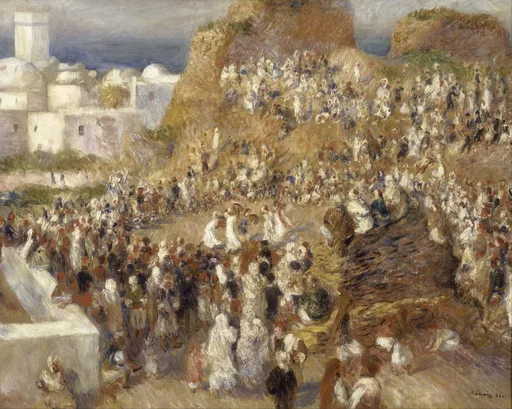
The Mosque (Arab Festival)
From $109 -
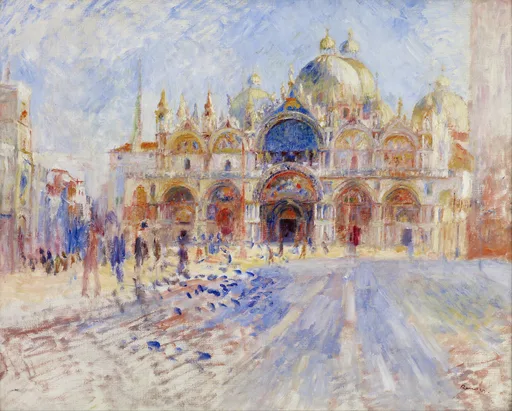
The Piazza San Marco, Venice
From $109 -
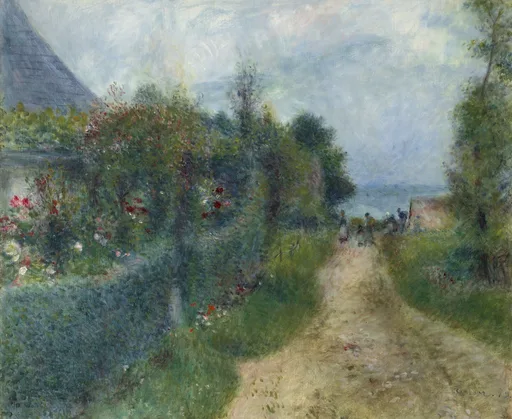
The Road at Wargemont
From $109 -
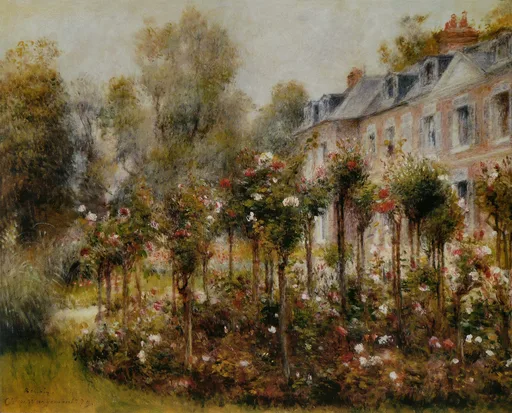
The rose garden at Wargemont
From $109 -
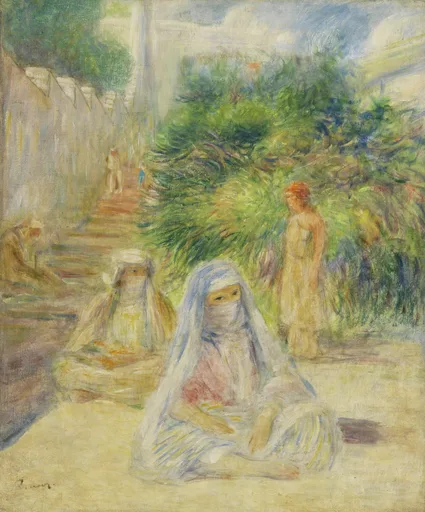
The Staircase, Algiers
From $109 -
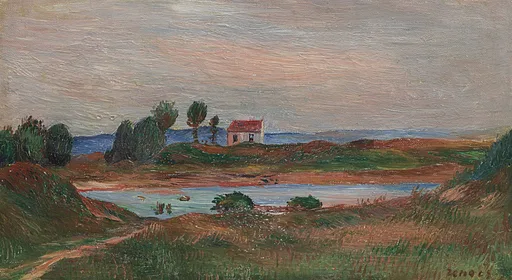
View of Brittany
From $109 -
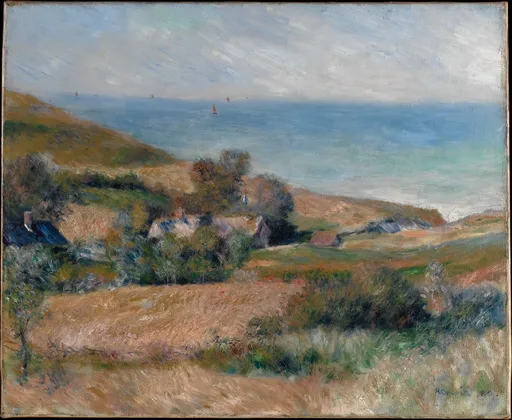
View of the Seacoast near Wargemont in Normandy
From $109
Following Delacroix
Delacroix's North African journey of 1832 was a founding myth for French painting, and Renoir went partly to see what his predecessor had seen. What he found was not the romantic subject matter but the light. He described Algiers as a marvel of whiteness, and he began painting shadows as colour rather than as absence of colour.
The two trips, in 1881 and 1882, produced landscape and street subjects painted on the spot: the Jardin d'Essai with its banana trees, the ravine of the Femme Sauvage, mosque exteriors, and crowds at a festival. The figure pictures in Arab costume were mostly worked up later, in France.
The odalisques, and how to read them
The reclining figures in eastern dress belong to a nineteenth century French genre, and they are studio inventions rather than observation: the costumes were props and the models were Parisian. It is worth knowing this rather than mistaking them for records of a place. As paintings they are among his richest in colour, with deep reds and golds he rarely used elsewhere.
Which room this collection suits
These have the most saturated colour in the catalogue, so they need a wall that will not fight them: white, off-white or a deep neutral. They are excellent in a room that gets little natural light, since the paintings supply their own. The landscape subjects work at generous size, ninety centimetres and up; the figure pictures are better kept moderate and hung where they can be seen close.
Frequently asked questions
When did Renoir go to Algeria?
Twice, in the spring of 1881 and again in 1882. The trips fall between the boating pictures and the classical bathers, and they mark a visible change in his palette.
Are the odalisques painted in Algeria?
No. The reclining figures in eastern costume were painted in France with Parisian models and studio props, in a genre that goes back to Ingres and Delacroix. The landscapes and street scenes are the ones painted on the spot.
Why are these less well known?
Because they sit outside the story usually told about Renoir, which runs from the river parties to the bathers. That is exactly why they are worth looking at: they are the least reproduced part of a very reproduced catalogue.
Do the colours suit a modern room?
Very well, if the wall is quiet. These are the richest reds and golds he painted, and against a plain white or a deep charcoal wall they are striking. Against a patterned or strongly coloured wall they lose.