
Paris & Montmartre Collection: Pierre-Auguste Renoir Oil Painting Reproductions
Showing 17–25 of 25 results
-
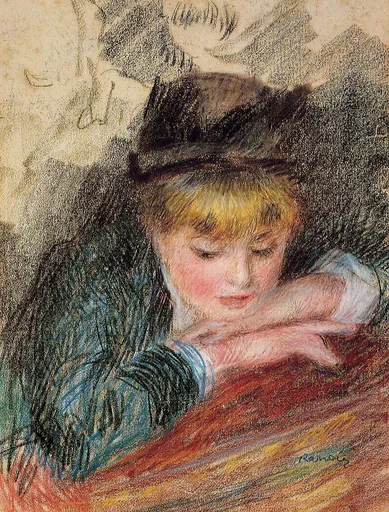
The Box
From $109 -
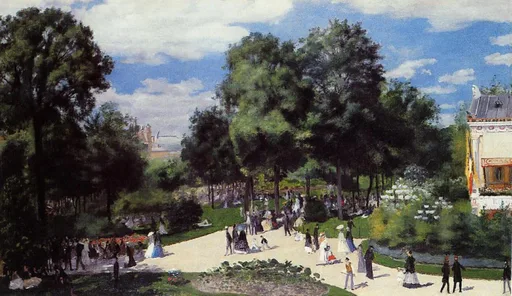
The Champs-Élysées during the 1867 World’s Fair
From $109 -
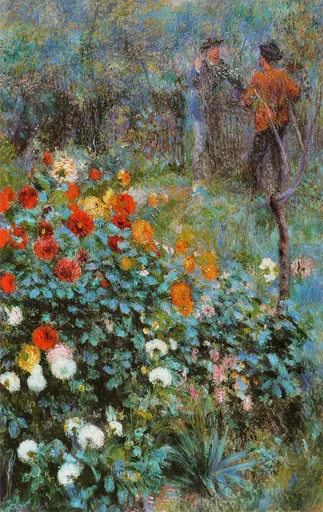
The Garden in the Rue Cortot, Montmartre
From $109 -
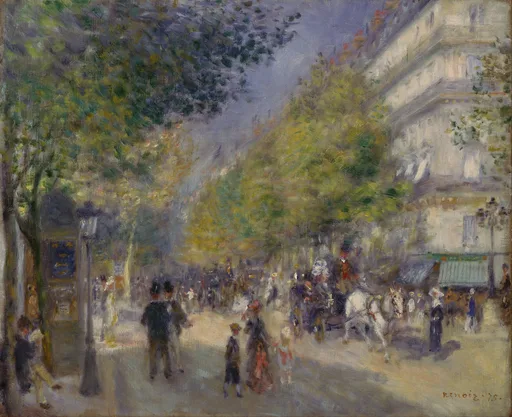
The Grands Boulevards
From $109 -
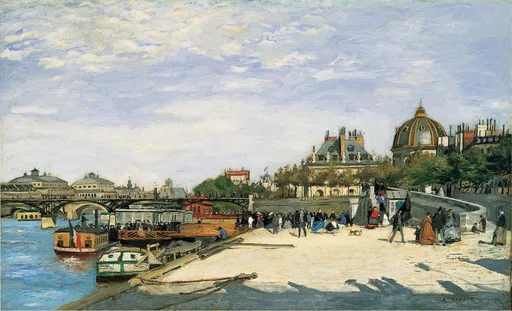
The Pont des Arts, Paris
From $109 -
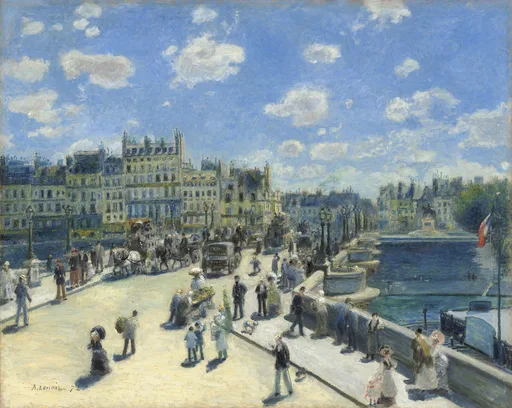
The Pont Neuf
From $109 -
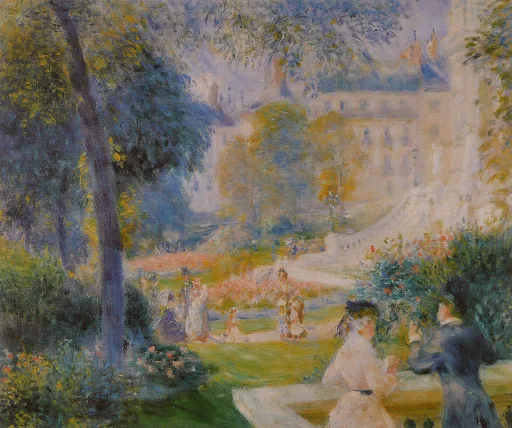
The Trinity Square
From $109 -
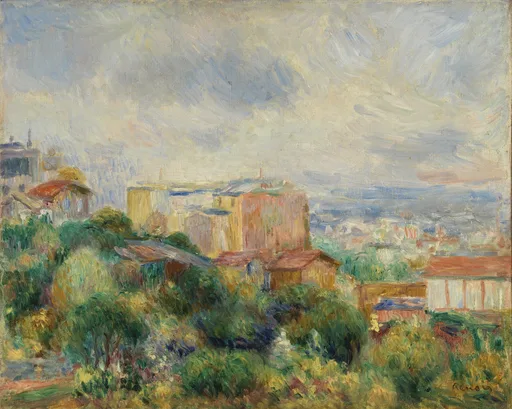
View From Montmartre (Vue de Montmartre)
From $109 -
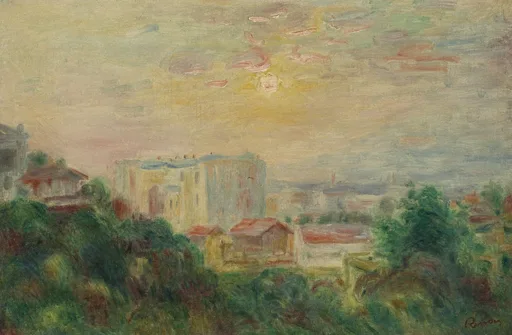
View of Montmartre
From $109
Painting a crowd
The problem with a street is that it moves. Renoir's answer, worked out on the Pont Neuf in 1872, was to paint the architecture and the light carefully and the people quickly, as marks that suggest a hat, a stride, an umbrella. His brother stood in the street below and delayed passers-by in conversation so they could be sketched.
Place Clichy, painted around 1880, is the most radical of them. A young woman's head fills the foreground, sharply focused and cropped by the edge of the canvas, while the crowd behind her dissolves. The device comes from photography and from Japanese prints, and it makes the picture feel like a glance rather than a view.
Montmartre before the myth
Renoir rented a studio and garden in the rue Cortot in 1875 and painted the Moulin de la Galette a few streets away. The Montmartre of these pictures is still half rural, with gardens, windmills and cheap rooms, decades before it became a destination. Those canvases are catalogued under Dance and the Moulin de la Galette.
Which room this collection suits
City pictures suit city rooms, and they have a horizontal energy that works well in a hallway or above a long piece of furniture. They are also the group with the coolest, greyest palette, which makes them a good match for a room where the warm Renoir palette would be too much. Ninety to one hundred and twenty centimetres wide is right on a main wall; the crowd needs the space.
Frequently asked questions
Did Renoir paint Paris often?
Less often than the river and the garden, which is why this is a small collection. But the pictures he did make are among his most ambitious, because a moving crowd is a much harder subject than a seated figure.
What is the picture with the cropped head?
La Place Clichy, around 1880. A young woman's head sits sharply in the foreground and is cut by the edge of the canvas, with the boulevard crowd blurred behind her. It is the most photographic composition he ever made.
Are the Moulin de la Galette pictures here?
No, they have their own collection, Dance and the Moulin de la Galette, along with the other dance subjects. This collection covers the streets, bridges and boulevards.
Do these suit a modern apartment?
Particularly well. The palette is cooler and greyer than the rest of his work, the subject is urban, and the horizontal format fits the long walls that apartments tend to have.